
You picked
Kasuti Trousseau – Bride
Made to order
A made-to-order Kasuti trousseau for the bride.
Includes
- Sarees
- Saree blouses
- Lehengas
- Dupattas

Karnataka’s heritage embroidery
Karnataka’s heritage hand embroidery, counted thread by thread on the weave – a made-to-order trousseau for the bride, the groom, family and friends.
See our full menu of services →Choose one to see what’s included and the next steps
You picked
Made to order
A made-to-order Kasuti trousseau for the bride.
Includes
You picked
Made to order
Kasuti-embroidered outfits for the groom, coordinated with the bride’s trousseau.
Includes
You picked
Made to order
Coordinated Kasuti outfits for the immediate family and friends of the couple.
Includes
You picked
Made to order
Two Karnataka crafts in one look: Kasuti hand embroidery with a Chittara-painted dupatta or potli.
Includes
You picked
Made to order
Chittara, the painted art of Malnad’s Deevaru community, on your wedding outfits: dupattas, saree pallus, blouse backs and stoles.
Includes
You picked
Ask for timing
Saree and matching blouse with Kasuti hand embroidery.
You picked
In the studio
Handloom Ilkal sarees from Bagalkot district in silk, cotton and silk-cotton, and Guledagudda Khun blouse pieces.
Includes
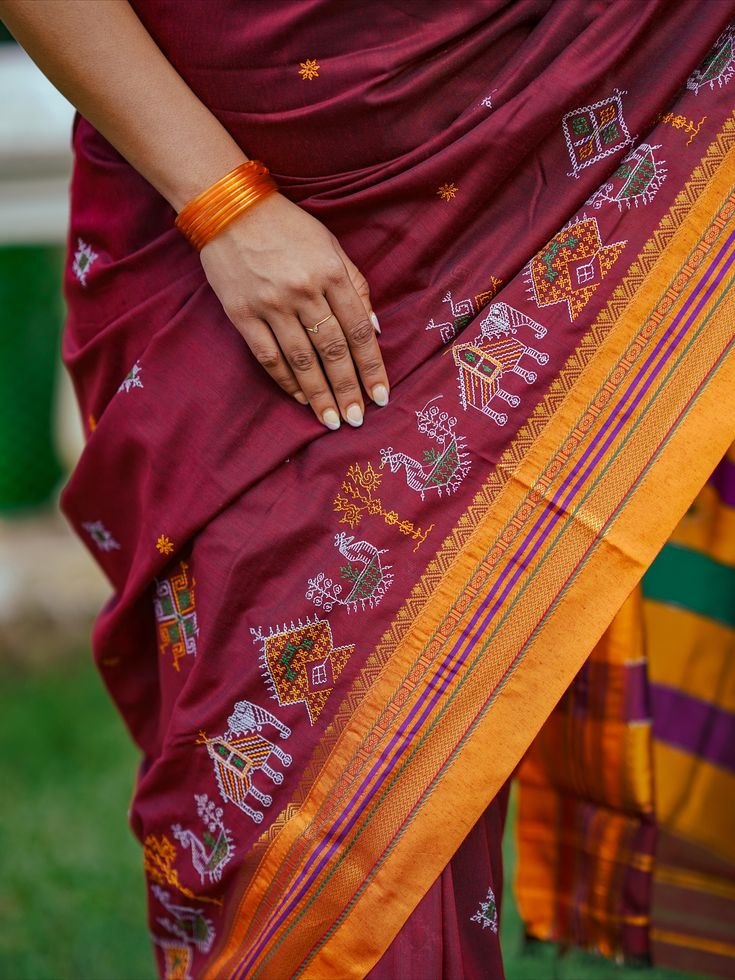


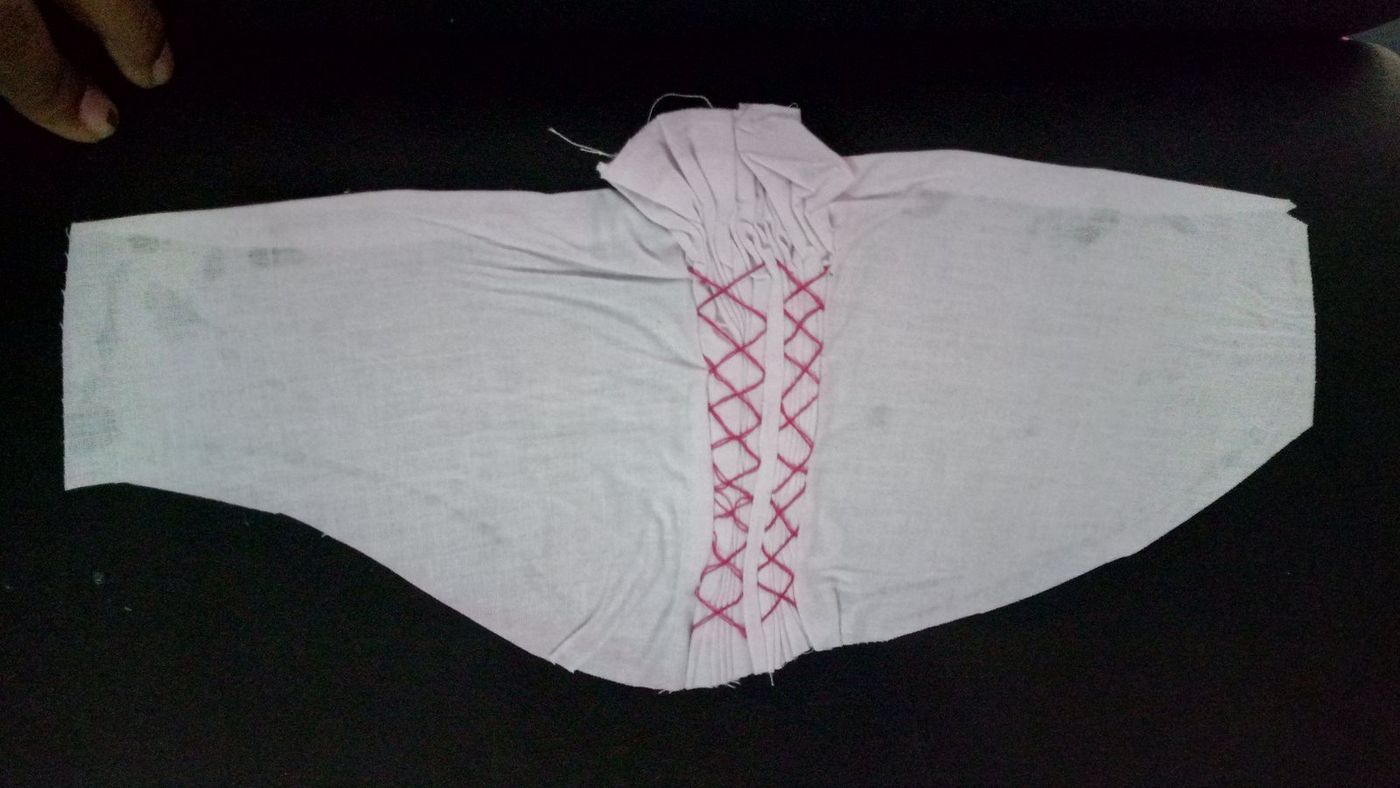
Kasuti is Karnataka’s traditional hand embroidery. It is counted thread by thread on the weave of the fabric, using four stitches: Gavanti, Murgi, Neyge and Menthe.
Gavanti and Murgi are double-running stitches: the needle runs along the line and comes back to fill the gaps, so the back looks almost the same as the front. Ask to turn over the sample at our Kasuti Corner.
Bring it to the studio. Kasuti is counted on the weave, so we’ll check with you whether the fabric suits it.
Kasuti is slow, careful handwork. Talk to us as early as you can, ideally when you start planning your wedding outfits, and we’ll plan the timing with you.
Yes. We have handloom Ilkal sarees and Guledagudda Khun blouse pieces, and Kasuti-embroidered saree and blouse sets.
Chittara is a painted folk art from the Malnad region of Karnataka, kept alive by the women of the Deevaru community. It is traditionally painted on mud walls for weddings, births and festivals, in natural colours: white from rice paste, black from roasted rice, yellow from seeds and red from red earth. Its geometric motifs carry meanings, such as the palanquin for prosperity. We paint Chittara on fabric for weddings and gifts, and teach it in our Fashion School.
Talk to Poornima’s team
Orders are now open, and you can order from home. Message us on WhatsApp: share your design, get a price and book your slot.
See what else is happening at the studio →