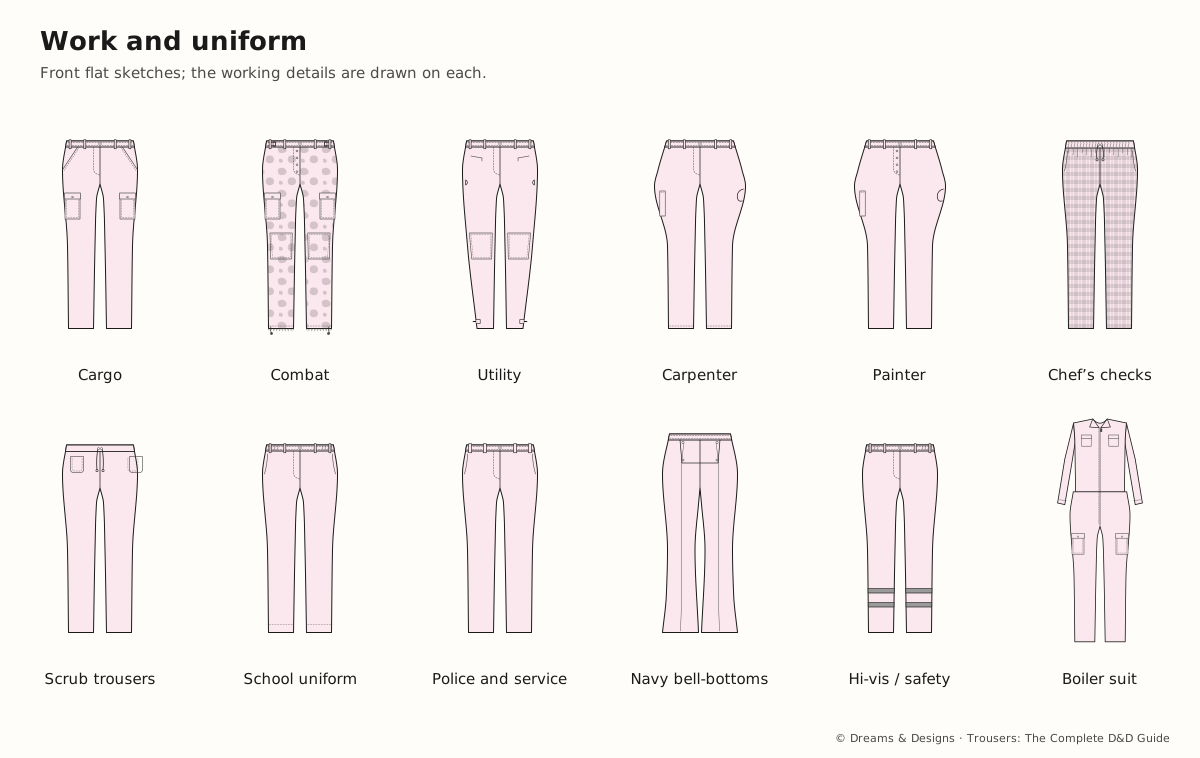
Work and uniform trousers are made for a job before they are made for fashion: to carry tools, take a knock, be seen on a road, survive a hospital wash, or show who belongs to which school or service. This lesson covers twelve of them, from cargo and carpenter trousers to scrubs, school uniform and the boiler suit.
What you’ll learn
- What each of twelve work and uniform trousers is made to do.
- The working details: bellows pockets, hammer loops, knee patches, reflective bands.
- Where safety standards apply, and what needs checking.
- How each is cut from the block and worn in India today.
What links these styles
Every trouser here is shaped by a task. Durability comes first: heavy cotton drill and twill, reinforced knees and pockets, strong seams. Movement comes second: room at the seat and knee for kneeling, climbing and reaching, often with stretch. Then come the details that do a job: pockets in the right place, loops for tools, colour that hides stains or shows up in traffic.
To tell them apart, look at the pockets and the colour. Big thigh pockets mean cargo or combat; a hammer loop means carpenter; black-and-white checks mean a kitchen; soft colour-coded cotton with a drawstring means a hospital; fluorescent colour and silver bands mean road and site work. In India, khaki has long been the colour of police and of many school and service uniforms; boiler suits and work trousers are worn across factories, garages and construction; and scrubs are now everyday wear for millions of health workers. Several of these styles have also become fashion, and the work entries note where the fashion versions live.
Tap any style to open its entry.
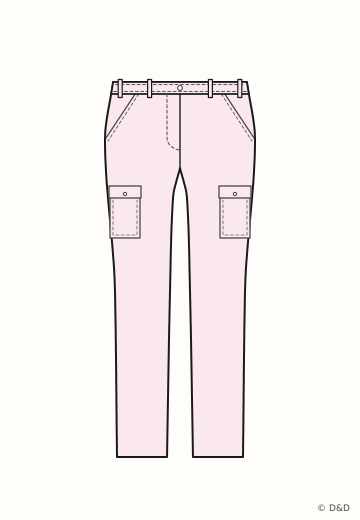
Cargo – large pockets on the outer thighs, often with flaps
Other names
Cargo pants, cargos, cargo trousers. Indians say “cargo” or “six-pocket” (sometimes “eight-pocket”), counting the pockets.
Where it comes from
From military uniforms. Large thigh pockets are commonly traced to British battledress of the late 1930s, which had a map pocket on the thigh, and to Second World War paratroopers’ trousers. Cargos moved into workwear, then into 1990s street fashion and every wardrobe since.
The cut
Mid rise, fly, belt loops. Straight or relaxed leg (slim and wide versions exist). Big patch pockets on the outer thighs: flat, pleated or bellows (gusseted), with flaps. Sometimes ankle drawcords and knee seams.
Fabric
Cotton twill, canvas, ripstop, cotton-nylon. Thin, soft fabric makes the pockets sag.
From the block
The block with a little extra ease; add pocket placement lines on the side seam at the thigh. See Patch and cargo pockets.
Wear it
Women, men and children; casual, travel, outdoor and work. With T-shirts, shirts and boots or trainers. Fashion versions are in Every trouser: men’s styles and Every trouser: street and subculture.
Fit notes and a tip
Pockets that gape when empty look sloppy. Tip: put a hidden snap under the flap, and place the pocket a little forward of the side seam so it sits on the thigh, not behind it.
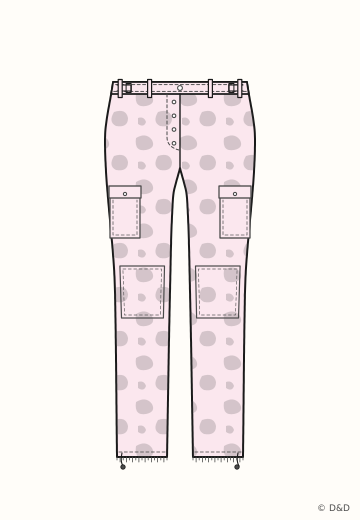
Combat – military field trousers: cargo pockets, knee room, tied ankles
Other names
Combat trousers, combats, military pants, field trousers, BDU trousers (from “battle dress uniform”).
Where it comes from
From twentieth-century army field uniforms, designed to carry kit and move freely. Surplus combats became civilian casual and subculture wear from the 1960s onwards.
The cut
Mid rise, button or zip fly, belt loops and often side adjusters. Relaxed straight leg, cargo pockets, double-layer knees and seat, sometimes knee darts and a crotch gusset. Drawcords at the ankle to tuck into boots.
Fabric
Ripstop cotton or poly-cotton, heavy twill; camouflage or plain olive, khaki, black.
From the block
Add ease, knee darts or a knee seam, a crotch gusset, and reinforcement patches. See Gussets and the crotch gusset and Patch and cargo pockets.
Wear it
Unisex; outdoor, trekking, casual and street. In India, exact copies of service uniforms and camouflage may be restricted for civilians; ask a lawyer or the service before making or selling them.
Fit notes and a tip
Combats must allow kneeling and climbing. Tip: test the toile by kneeling on one knee and stepping up onto a chair.
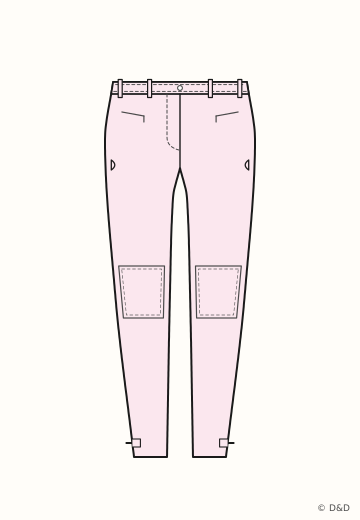
Utility – practical trousers with many pockets, loops and zips
Other names
Utility pants, work pants, tactical trousers (one kind).
Where it comes from
A general name for practical work and outdoor trousers. It is also a fashion label for trousers that borrow work details (see Every trouser: street and subculture, Utility streetwear). Not to be confused with Britain’s wartime “Utility” clothing scheme.
The cut
Mid rise, fly, straight or tapered leg. Pockets of different sizes, zipped and flapped; loops and rings for tools or keys; knee panels; adjustable hem tabs.
Fabric
Stretch twill, ripstop, canvas, nylon blends with water-repellent finishes.
From the block
The block with style seams at the knee; add pockets and loops. See Patch and cargo pockets and Belt loops, tabs and adjusters.
Wear it
Unisex; trades, outdoor, travel, casual.
Fit notes and a tip
Too many heavy items in pockets pull the waist down. Tip: put the heaviest pocket near the side seam, close to the hip, and reinforce its top corners.
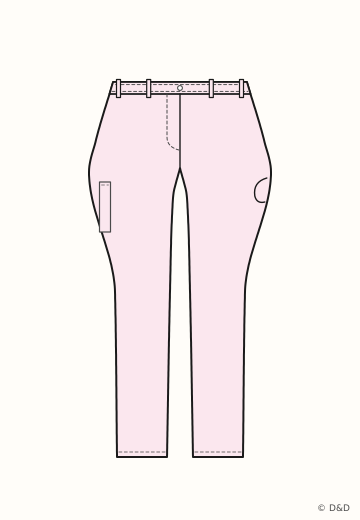
Carpenter – loose, sturdy trousers with a hammer loop and rule pocket
Other names
Carpenter pants, carpenter jeans (the denim version is in Every trouser: denim), work dungarees (bib version).
Where it comes from
American workwear from the late nineteenth and early twentieth centuries, made for carpenters and builders. It became 1990s fashion.
The cut
Mid rise, fly, loose straight leg. A loop on the leg to hang a hammer, usually on the left, and a narrow pocket on the thigh for a folding rule, usually on the right. Sometimes double-layer knees.
Fabric
Cotton duck canvas, heavy denim, drill.
From the block
The block with more thigh ease; add the loop and pocket pieces. See Patch and cargo pockets and Belt loops, tabs and adjusters.
Wear it
Unisex; trades, workshops, gardening, casual. With T-shirts, flannel shirts, work boots or trainers.
Fit notes and a tip
A hammer loop on a narrow leg swings into the knee. Tip: place it high, just below the pocket, and bar-tack both ends.
Painter – white, roomy trousers with pockets for brushes

Other names
Painter’s pants, painter trousers, decorator’s trousers (British).
Where it comes from
Workwear for house painters and decorators, white because the work used white paint and whitewash. A casual fashion in the 1970s, and again since.
The cut
Like a carpenter trouser: loose straight leg, with narrow brush and tool pockets on the thigh and a loop. Usually white or natural cotton.
Fabric
Cotton drill or canvas, white or undyed.
From the block
As for the carpenter trouser. See Patch and cargo pockets.
Wear it
Unisex; painting and decorating, art classes, workshops, summer casual. A good choice for fashion and art students: loose enough to kneel on the floor while cutting, and easy to replace. Children’s versions make sturdy art-class trousers. With T-shirts, old shirts and canvas shoes.
Fit notes and a tip
White drill shows every mark. Tip: for students, sew the brush pockets from a darker fabric so stains stay out of sight.
Chef’s checks – black-and-white check trousers for the kitchen

Other names
Chef’s trousers, chef pants, chef checks, baggies (kitchen slang).
Where it comes from
Part of the chef’s uniform that grew up in professional kitchens in nineteenth-century France and spread worldwide. The small check is often said to hide stains; the exact origin of the check is not documented.
The cut
Mid rise, elastic and drawstring waist, relaxed straight leg, deep pockets. Easy to wash and to change in.
Fabric
Poly-cotton or cotton drill in a small black-and-white check or houndstooth. Plain black is also common now.
From the block
The block with an elastic waist and extra ease; see Waistbands: elastic, half-elastic, nada and adjustable.
Wear it
Unisex; kitchens, catering, hotel management students in India (often part of the course uniform). With chef’s jackets, aprons and non-slip shoes.
Fit notes and a tip
Kitchens are hot and the work is bending and lifting. Tip: keep the hem clear of the floor and the legs straight, not flared, so nothing catches.
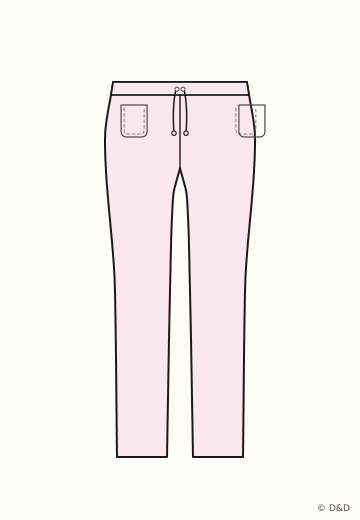
Scrub trousers – simple drawstring trousers for hospitals and clinics
Other names
Scrubs, scrub pants, surgical trousers. In India also “OT pants” (operation theatre) or “OT dress”.
Where it comes from
From hospital operating theatres in the mid-twentieth century. Surgical clothing moved from white to green and blue; one common explanation is that these colours reduce glare and contrast against red under bright lights. Scrubs are now worn across healthcare.
The cut
Mid rise, drawstring or elastic waist, straight leg, a few patch pockets. Often unisex and sometimes reversible. Newer fitted “jogger” scrubs have cuffs and a slimmer leg.
Fabric
Poly-cotton that survives hot washing and disinfection; stretch blends for newer styles. Colours are often set by the hospital to mark roles.
From the block
The block with the waist straight up for a drawstring casing; for reversible scrubs, French or flat-felled seams. See Seams: plain, French and flat-felled.
Wear it
Unisex; doctors, nurses, technicians, students, vets and dentists. With the matching scrub top and clean, closed shoes.
Fit notes and a tip
Hospitals have their own rules on fabric, colour and pockets; check with the hospital before making to order. Tip: use bar tacks at pocket corners, which take the most strain in daily washes.
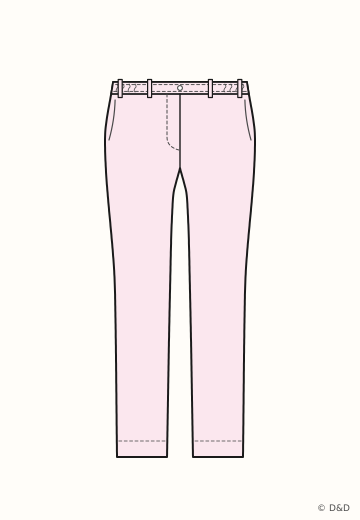
School uniform – trousers or half pants set by the school, sturdy and plain
Other names
School trousers, school pants; in India “full pant” and “half pant” for older and younger boys. Uniform is vardī (वर्दी) in Hindi and samavastra (ಸಮವಸ್ತ್ರ) in Kannada. Children’s versions are also in Every trouser: children’s styles (School trousers, School shorts).
Where it comes from
School uniforms spread with British-style schools in the nineteenth and twentieth centuries. In India, rules differ by school, board and state: many schools have boys in half pants in the lower classes and full trousers later, and girls in skirts, pinafores, salwar kameez or trousers.
The cut
Mid rise, fly or elastic, often a half-elastic or adjustable inside waist, straight leg. Grey, navy, khaki, black or white. Deep hems to let down.
Fabric
Poly-viscose or poly-cotton that resists creasing and survives daily washing; cotton for hot climates.
From the block
Children’s blocks: the child block with growth tucks and a deep hem from Children’s blocks: baby, toddler and teen, and growth tucks; adjustable waist from Waistbands: elastic, half-elastic, nada and adjustable.
Wear it
Children and teens; school days and events. With the school shirt, belt, tie and shoes.
Fit notes and a tip
Children grow, so fit for room without looking oversized. Tip: buttonhole elastic inside the waist lets one pair fit for a year or more.
Police and service – uniform trousers for police and other services

Other names
Uniform trousers, service trousers. In India police uniform is widely called “khaki”; in Hindi, vardī (वर्दी).
Where it comes from
Most Indian police forces wear khaki, a tradition from the colonial period; some differ, such as the white uniform of the Kolkata Police. Fire, forest, postal, railway, security and transport services each have their own colours and rules.
The cut
Mid rise, fly, straight leg, deep pockets, wide belt loops for a duty belt. Some services add a side stripe or cargo pockets.
Fabric
Poly-cotton or poly-viscose drill or gabardine, chosen for durability and colour-fastness.
From the block
The men’s or women’s block; widen and strengthen the belt loops. See Belt loops, tabs and adjusters.
Wear it
Women and men in the service; with the uniform shirt, belt and boots.
Fit notes and a tip
Uniform rules are set by each service and state, and who may wear an official uniform is controlled by those rules and by law; ask the service, or a lawyer, before making copies for anyone outside it. Tip: when making service uniform to order, ask for the written specification for colour, cloth and insignia, and keep a copy.
Navy bell-bottoms – sailors’ trousers flared at the hem, with a front flap

Other names
Sailor’s bell-bottoms, naval bell-bottoms, “bells”.
Where it comes from
Flared sailors’ trousers appear in the early nineteenth century and became standard issue in several navies, including the Royal Navy and the US Navy. It is traditionally said the wide legs were easy to roll up for washing decks, and to pull off over boots in the water; these reasons are not confirmed. Many navies have since moved to straight-leg trousers; dates differ by navy. The fashion bell-bottom is in Every trouser: leg shapes (kick flare to parachute).
The cut
High rise, a front flap (broadfall) buttoned at the waist instead of a fly, flared leg from the knee. Some navies pressed horizontal creases into the legs.
Fabric
Navy wool serge or white cotton drill.
From the block
Draft a flare, then make a flap front as for the sailor trouser. See Button plackets and side openings and From the block: taper, flare and wide legs.
Wear it
Naval and sea-cadet uniform and costume; the fashion version for everyone.
Fit notes and a tip
The flap needs firm buttons and an interfaced band. Tip: for costume, check pictures of the right navy and period; details changed often.
Hi-vis / safety – fluorescent trousers with reflective bands for being seen

Other names
High-visibility trousers, hi-viz, safety trousers.
Where it comes from
Developed in the twentieth century for railway, road and construction workers. Today they are made to safety standards: internationally ISO 20471, and others such as ANSI/ISEA 107 in the USA. For India, check the current Bureau of Indian Standards (BIS) requirement for the job before making or selling hi-vis wear.
The cut
A work trouser, mid rise, straight leg, with fluorescent yellow, orange or red cloth and bands of retroreflective tape round the lower legs at set heights. Knee-pad pockets are common.
Fabric
Certified fluorescent polyester or poly-cotton; certified retroreflective tape. Ordinary bright cloth is not the same and is not safe for the purpose.
From the block
The work trouser block; band positions are set by the standard, not by taste. See Patch and cargo pockets for pockets.
Wear it
Unisex; road, rail, site, airport and traffic work. Children’s hi-vis vests are more common than trousers.
Fit notes and a tip
Safety wear must be certified as a finished garment. Tip: do not alter or shorten certified hi-vis trousers in a way that covers or cuts the reflective bands.
Boiler suit – a one-piece work garment, trousers and top together

Other names
Coveralls (American), overalls (British, in work use), workwear one-piece. In India also “boiler suit” in factories and garages.
Where it comes from
Work suits worn over or instead of clothes became common in industry in the early twentieth century. The name is traditionally linked to stokers and workers who cleaned boilers. The one-piece fashion version is in Every trouser: one-piece.
The cut
A shirt-like top and trousers cut as one, closed with a zip or buttons from the neck to the crotch. Long sleeves, collar, plenty of pockets, an elastic or belted waist. Roomy, so it can be worn over clothes.
Fabric
Cotton drill, poly-cotton, flame-resistant cloth for some trades (certified).
From the block
Join a shirt block to the trouser block at the waist line, adding extra body length for bending. See The men’s block and Gussets and the crotch gusset.
Wear it
Unisex; factories, garages, farms, art studios; as fashion with trainers and a belt. Children’s versions for play.
Fit notes and a tip
The body length from shoulder to crotch is the key measurement; too short and it pulls at the crotch. Tip: do the overhead-reach test in the toile, and add length at the waist line if it pulls.
Sources and uncertain points
- Cargo pockets: the British battledress and paratrooper origins are commonly cited; details differ between sources.
- Chef’s check: stain-hiding is the usual explanation; the origin is not documented.
- Scrub colours: the glare and contrast explanation is common, not confirmed for every hospital.
- Navy bell-bottoms: the reasons given for the flare are traditionally said; navies changed dates and details.
- Hi-vis: ISO 20471 and ANSI/ISEA 107 are the main standards named; the Indian requirement must be checked with BIS for each use.
- Uniform rules for Indian schools, police and services differ by state and service; examples are general.
- Kannada samavastra and Hindi vardī: in common use; spellings for a D&D teacher to check.
- Main source: D&D ebook Encyclopedia of Trousers for Women, ch. 27, 30, 34, 35; widened with general dress history.