The second half of South Asia’s trousers runs from the festive sharara and gharara, through the pants Indian women now wear with kurtas every day, to the stitched dhotis, the jodhpur and the trousers of Nepal, Pakistan and Bangladesh. Some are centuries old, some arrived in the last twenty years. Each has its own entry here.
What you’ll learn
- Fourteen styles, from the sharara to the shalwar of Pakistan and Bangladesh.
- How to tell the sharara, the gharara and the pant-style lehenga apart.
- Which styles turn a draped garment into a stitched one, and what that means at a temple or wedding.
- Which Module 4 draft each starts from.
What links these styles
These are the festive, the fusion and the neighbouring trousers of the region. They fall into four groups:
- Festive flares: the sharara (flared from the hip), the gharara (fitted to the knee, then flared), the pant-style lehenga (a lehenga look with two legs) and the Indian palazzo.
- Everyday pants with kurtas: cigarette pants, straight pants and nada-waist pants, which have largely taken over from the salwar in Indian cities.
- Draped looks, stitched: dhoti pants, the pre-stitched dhoti and the pre-stitched panche or mundu, plus harem or Afghani pants.
- Regional and neighbouring trousers: the Jodhpuri breeches of Rajasthan, the suruwal of Nepal and the shalwar of Pakistan and Bangladesh.
Shops use these names loosely, especially sharara and gharara, so agree a style by picture. The regions are in Trousers across India and South Asia, the wraps behind the stitched dhotis in The family: dhoti, mundu, lungi and other wraps, and the drafts in Module 4, Indian drafts: dhoti pants, sharara and gharara. Salwars, the churidar and pyjamas are in Every trouser: India and South Asia (salwars, churidar and pyjamas).
Tap any style to open its entry.
Sharara – wide flared legs from the hip to the floor, for festive sets

Other names
Sharara; शरारा in Hindi. Some shops call any wide festive trouser a sharara, and older sources sometimes swap the names sharara and gharara.
Where it comes from
The sharara is widely linked with the courtly dress of Awadh (Lucknow) and with Muslim wedding wear in north India, Hyderabad and later Pakistan. Histories differ on details and dates. In recent decades it has become festive wear for women across India, especially for mehendi, sangeet and Eid.
The cut
High rise, fitted at the waist and hip, then flaring widely from the upper thigh to a floor-length hem of about 60 in (152 cm) per leg. Elastic with a flat front, or a fitted waist with a side zip. No knee join.
Fabric
Best: georgette, chiffon, silk, crepe, net over soft lining, and light brocade. Worst: heavy, stiff fabrics, which make the waist bulky and the hem stand out. Allow 4–6 m depending on width.
From the block
From the wide-leg pattern, slash and spread to the hip line, as in Module 4, Indian drafts: dhoti pants, sharara and gharara. A fitted yoke reduces bulk at the waist. Hang 24 hours, then level the hem from the floor.
Wear it
Women: with a short kurti or peplum top and a long dupatta, for mehendi, sangeet, Eid and festive parties. Men: sharara-style wide pants are a recent fashion, with moderate flare. Girls: keep it ankle length. Shoes: block heels, wedges or juttis; the hem is levelled in them.
Fit notes and a tip
Start the flare at the hip, not the waist, so the waist stays smooth. Tip: a heavy border at the hem weights the flare and helps it hang.
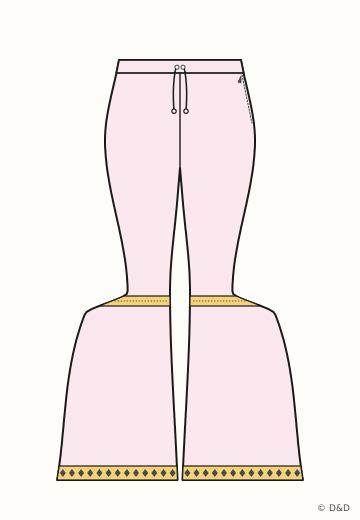
Gharara – fitted to the knee, then gathered or flared, with a band at the join
Other names
Gharara; ग़रारा in Hindi and Urdu. The band at the knee is often gota or zari work.
Where it comes from
The gharara is widely associated with the Muslim courtly culture of Awadh (Lucknow) and with Hyderabad, and with weddings in parts of north India and Pakistan, where many brides wear one for the nikah or a later function. It is traditionally said to have grown from the farshi pyjama; sources differ. It came back into wide fashion in India in the 2010s.
The cut
High rise, fitted from waist to knee. At the knee each leg joins a very full lower section, gathered (about three times the knee round) or flared with kalis, to the floor. A band covers the knee join.
Fabric
Best: silk, tissue, georgette, crepe and brocade, with soft lining. Worst: thick, stiff cloth, which makes the gathers bulky at the knee.
From the block
Cut the block at the knee and add the gathered or kali lower section: Module 4, Indian drafts: dhoti pants, sharara and gharara. Gather in two rows of long stitches (Module 5, Gathers and elastic shirring).
Wear it
Women: with a short or hip-length kurta and a heavy dupatta, for weddings, nikah, Eid and receptions. Girls: with less fullness and an ankle-length hem. Shoes: juttis, heels.
Fit notes and a tip
The knee band must sit level and at the real knee; mark it on the wearer at fitting. Tip: use flared kalis instead of a gathered rectangle in heavy fabrics.
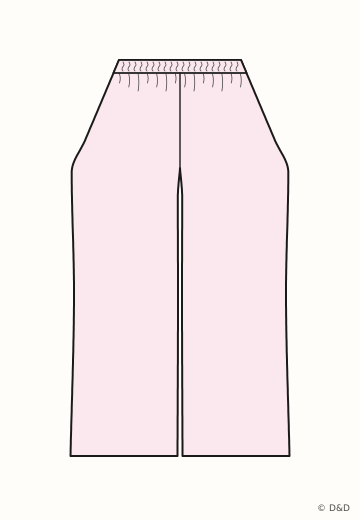
Palazzo (Indian) – very wide straight legs on elastic, worn with kurtas
Other names
Palazzo, palazzo pants; प्लाज़ो in Hindi shop use.
Where it comes from
The palazzo trouser (Italian, “palace”) is a Western fashion of the 1960s and 1970s (see Every trouser: leg shapes (straight to flare) and Every trouser: leg shapes (kick flare to parachute)). In India it became the leading kurta pant from about 2014 onwards, replacing many salwars and leggings in daily wear, in cotton and rayon prints.
The cut
High rise on full elastic or a flat front with elastic back, a very wide leg from the hip, ankle or floor length, with no ankle shaping. Indian palazzos are often a little narrower and shorter than Western evening palazzos, for walking in the street.
Fabric
Best: rayon, cotton, cotton flex, crepe and georgette. Worst: stiff cotton, which flares out like a skirt.
From the block
Module 4, From the block: palazzo, harem, culotte and jogger. Add side-seam pockets; customers ask for them.
Wear it
Women: with straight and A-line kurtas, short kurtis and tops; office, college, travel and festivals. Girls: comfortable and easy to sew. Shoes: flats, sandals, wedges.
Fit notes and a tip
Check that the hem clears the floor in the shoes worn, for street wear. Tip: on prints, match the print at the side seams; wide legs show every mismatch.
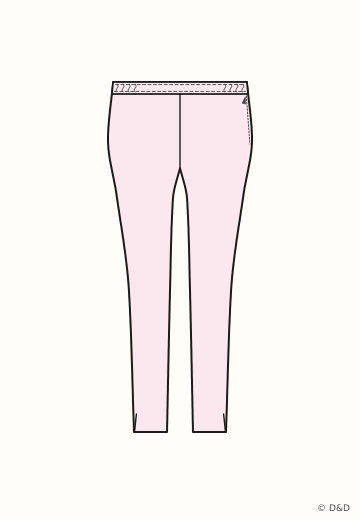
Cigarette pants (Indian) – slim straight pants to the ankle, worn under kurtas
Other names
Cigarette pants, kurta pants, “pencil pants” in some shops.
Where it comes from
The cigarette trouser is a Western slim style of the 1950s and 1960s (see Every trouser: leg shapes (straight to flare) and Every trouser: leg shapes (kick flare to parachute)). In India, from about the 2010s, slim cotton and lycra pants worn under kurtas became a daily alternative to the churidar and leggings, and shops call them cigarette pants.
The cut
Mid to high rise, slim straight leg from hip to ankle, ankle or 7/8 length. Waist on elastic, or a flat front with elastic back, sometimes a side zip. Often a small slit or lace at the hem.
Fabric
Best: cotton lycra, cotton satin with stretch and rayon blends. Worst: stiff non-stretch cloth if the leg is very slim; add ease or use stretch.
From the block
From the women’s block, taper the leg as in Module 4, From the block: taper, flare and wide legs; reduce ease for stretch fabric.
Wear it
Women: with straight and A-line kurtas with side slits; office, college and daily wear. Girls: with short kurtas. Shoes: flats, loafers, juttis.
Fit notes and a tip
Check the seat and knee in a deep bend. Tip: a small hem slit lets the pant pass over the heel without a zip.
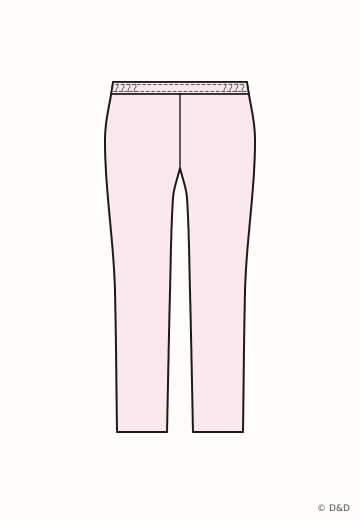
Straight pants with kurta – a regular straight leg on a half-elastic waist
Other names
Straight pants, kurta pants, trouser pants.
Where it comes from
A modern Indian everyday style that grew from the 2010s as kurta sets moved towards trouser-like pants. Not linked to one region.
The cut
Mid to high rise, a regular straight leg from hip to an ankle hem of about 15–17 in (38–43 cm), half-elastic or full elastic waist. Wider than cigarette pants, narrower than a palazzo.
Fabric
Best: cotton, cotton flex, rayon, linen blends, chanderi with lining for festive sets. Worst: very thin fabric, which clings to the leg.
From the block
The women’s block, legs kept straight: Module 4, The women’s block: the framework and the front; waistband as in Waistbands: elastic, half-elastic, nada and adjustable.
Wear it
Women: with straight kurtas, often matching in a three-piece set with dupatta; office, daily wear and festivals. Older women find the half-elastic waist comfortable. Shoes: any flats or low heels.
Fit notes and a tip
The kurta slit should land above the widest part of the hip, so the pant line shows cleanly. Tip: add a border at the hem to match the kurta.
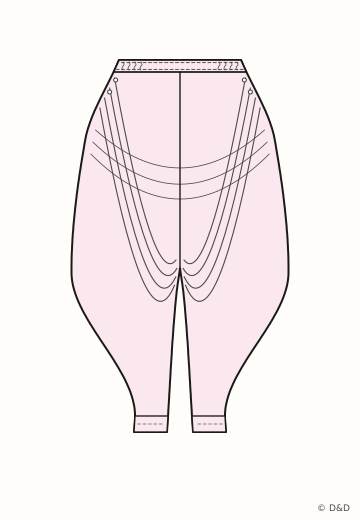
Dhoti pants – a stitched dhoti look: low crotch, cowl front, narrow ankle
Other names
Dhoti pants, dhoti salwar (in some shops), dhoti trousers; धोती पैंट in Hindi shop use.
Where it comes from
A stitched version of the draped dhoti and panche worn across India. It became popular as Indo-western wear for women and men in recent decades: the look of the drape without the skill of tying it. See Module 9, Transformation in Indian fashion.
The cut
Crotch lowered about 8 in (20.5 cm), extra width at the front waist folded into a cowl, plain back on elastic, and the leg tapered to a cuff of about 13 1/2 in (34.5 cm).
Fabric
Best: soft silk, cotton silk, rayon and georgette. Worst: stiff cotton, which holds the folds flat.
From the block
Module 4, Indian drafts: dhoti pants, sharara and gharara, and Module 5, Draped styles: dhoti pants, harem and drop-crotch.
Wear it
Women: with short or asymmetric kurtis and jackets; sangeet, festivals, dance. Men: with a short kurta or bandhgala, for weddings and festivals (see Every trouser: men’s styles). Children: very popular for festivals and school events (see Every trouser: children’s styles). Shoes: juttis, mojaris.
Fit notes and a tip
Test the stride and the stairs; too low a crotch catches. Tip: drape the folds on the toile before fixing them on paper.
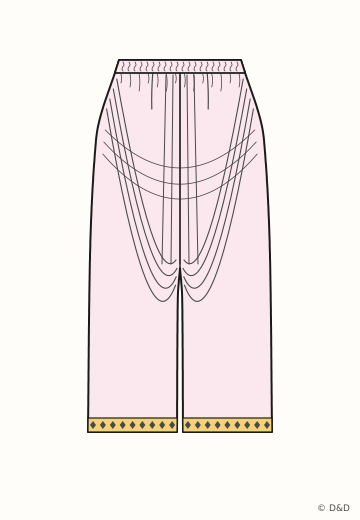
Pre-stitched dhoti – a ready-tied dhoti with a fixed waist, worn like a draped one
Other names
Ready-made dhoti, readymade dhoti, stitched dhoti; धोती in Hindi; ಧೋತಿ or ಪಂಚೆ in Kannada.
Where it comes from
The draped dhoti is one of India’s oldest garments (see The family: dhoti, mundu, lungi and other wraps). Pre-stitched versions, with the pleats sewn in and a waistband fitted, became widely sold in recent decades for grooms, wedding guests, boys at ceremonies and anyone who has not learned to tie one. Exact beginnings are not recorded.
The cut
A single dhoti length, partly stitched: the front pleats are sewn into a band, the tail (kaccha) is pleated and fixed so it passes between the legs to the back, and the waist closes with hooks, elastic or velcro. It keeps the look of a tied dhoti, often with the traditional border.
Fabric
Best: cotton, mul, silk and cotton silk with zari border, white or cream. Worst: synthetic cloth for long ceremonies in heat.
From the block
Not drafted from the block. Drape a real dhoti on the form and fix the pleats where they fall, as in Module 5, Draping a trouser on the form and Draped styles: dhoti pants, harem and drop-crotch.
Wear it
Men: with a kurta, angavastram (shoulder cloth) or silk shirt, for weddings, upanayanam, puja and festivals. Boys: small versions for ceremonies. Some temples and families expect a traditionally tied dhoti for rituals; check before the event.
Fit notes and a tip
The waist must be secure through long ceremonies and floor-sitting. Tip: add a hidden pocket in the waistband for a phone or keys; grooms always ask.
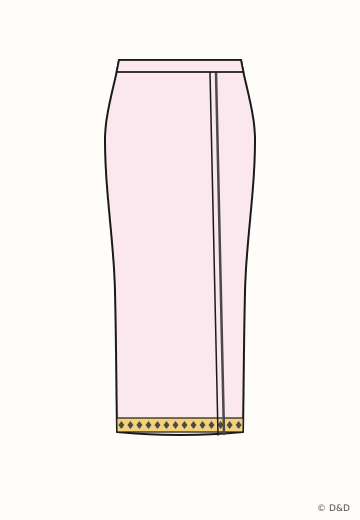
Pre-stitched panche / mundu style – a wrap with a stitched belt and pocket, worn straight
Other names
Ready-made panche, ready-to-wear mundu, velcro mundu, pocket veshti. Panche (ಪಂಚೆ) in Kannada, mundu in Malayalam, veshti in Tamil, pancha in Telugu.
Where it comes from
The panche, mundu and veshti are draped wraps worn by men across south India (see The family: dhoti, mundu, lungi and other wraps). Ready-to-wear versions with a velcro or elastic belt and a pocket became popular from about the 2000s, especially for weddings, festivals and office celebrations such as Onam. It is a wrap, not a trouser, but it is listed here because customers ask tailors for it with trousers.
The cut
A length of cloth with a stitched waistband or belt, wrapped and fastened with velcro or hooks, so it holds without the knot or tuck. Straight to the ankle, not divided between the legs. Usually the woven border falls at the front edge.
Fabric
Best: handloom cotton, with kasavu (gold) border for Kerala-style mundu, zari or coloured borders for panche and veshti; silk for weddings. Worst: synthetic cloth, which slips and is hot.
From the block
Not from the trouser block: a rectangle with a waistband shaped to the waist. Work out the overlap on the body.
Wear it
Men and boys: with a shirt, kurta or angavastram, for weddings, puja, Onam, Pongal, Ugadi and family functions. Temples that require a dhoti or mundu usually accept it, but some rituals expect a traditionally tied one; check first.
Fit notes and a tip
The overlap should not open when walking or sitting on the floor. Tip: sew velcro on a strong tape, not straight onto thin cotton.
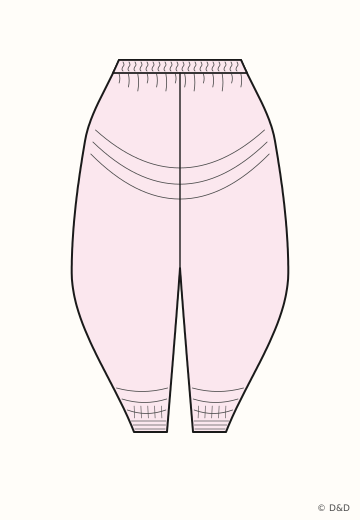
Harem / Afghani pants – very low crotch, full legs, gathered ankles
Other names
Afghani pants, drop-crotch pants, aladdin pants, harem pants. “Harem” comes from nineteenth-century European fantasy about the Ottoman world, not from the wearers; prefer “drop-crotch” or “Afghani” (see Trousers across Asia).
Where it comes from
The shape descends from the wide-trouser family of West and Central Asia (şalvar, shalwar, tunban). In India, harem and Afghani pants became casual and fusion wear from the 2000s, separate from the salwar suit. The general drop-crotch style is in Every trouser: leg shapes (straight to flare) and Every trouser: leg shapes (kick flare to parachute).
The cut
Elastic or drawstring waist, a very low crotch, full legs and a narrow banded or elasticated ankle. No fly or side opening.
Fabric
Best: rayon, soft cotton, jersey and modal. Worst: stiff cotton, which makes the balloon stand out.
From the block
Module 4, From the block: palazzo, harem, culotte and jogger.
Wear it
Women and men: with tees, short kurtas, tunics and jackets; casual, yoga, travel and dance. Children: comfortable for play, with soft elastic. Shoes: sandals, trainers.
Fit notes and a tip
Test the stride; the crotch must not catch on steps. Tip: a wide waistband elastic stops the weight of the legs pulling the waist down.
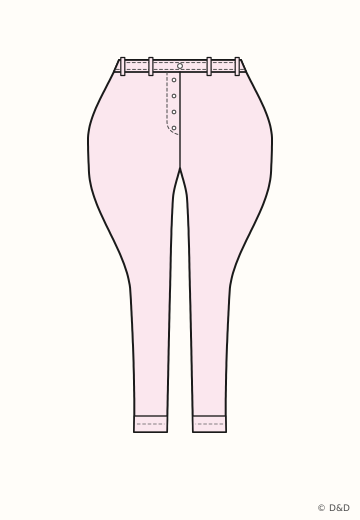
Jodhpuri breeches – full at the hip and thigh, close from knee to ankle
Other names
Jodhpurs, Jodhpuri pants, breeches; जोधपुरी in Hindi.
Where it comes from
Named after Jodhpur in Rajasthan. Close-legged riding trousers of this kind were worn by Rajput riders; it is traditionally said that Sir Pratap Singh of Jodhpur made them known in England when he visited for Queen Victoria’s Diamond Jubilee in 1897, after which English riders adopted them. The details of the story vary between sources. The riding version is in Every trouser: active and sport (joggers to cycling shorts) and Every trouser: active and sport (golf to dance).
The cut
High rise with a flat front and waistband, generous at the hip and thigh, then shaped in sharply at the knee and close to the ankle, with a small opening or strap at the ankle. The fullness allows the knee to bend in the saddle.
Fabric
Best: cotton drill, gabardine, wool blends, and stretch cotton for modern versions. Worst: limp cloth, which loses the shape at the thigh.
From the block
From the men’s or women’s block, add width at the side and inside of the thigh (slash and spread above the knee) and take the leg in from knee to ankle: Module 4, From the block: taper, flare and wide legs.
Wear it
Men: with a bandhgala or achkan and a safa (turban) for weddings in Rajasthan and across India; with jodhpuri boots or mojaris. Women: riding style and fusion wear with jackets. Boys: festive bandhgala sets.
Fit notes and a tip
The knee must bend fully without strain; test sitting and climbing. Tip: cut the lower leg slightly longer, as it rides up when the knee bends.
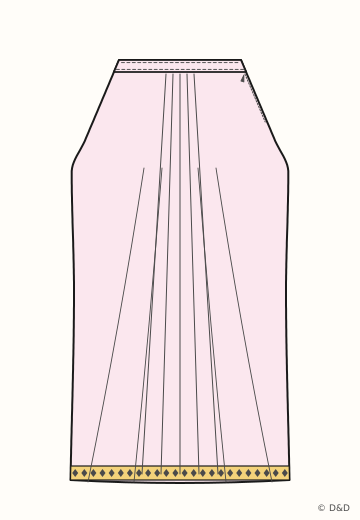
Pant-style lehenga – two very wide legs that look like a lehenga skirt
Other names
Lehenga pants, lehenga palazzo, divided lehenga.
Where it comes from
A recent Indian fashion, seen from about the late 2010s, for brides, bridesmaids and guests who want the look of a lehenga with the ease of trousers. It belongs between the trouser and the lehenga (see The family: skirts, lehengas and divided skirts).
The cut
High rise, fitted at the waist and hip, then two legs so wide (often panelled like a kalidar lehenga or deeply pleated) that, standing still, they look like a skirt. Floor length, with a heavy border.
Fabric
Best: silk, georgette, organza over lining, light brocade, net with can-can at the hem. Worst: heavy, stiff fabric at the waist.
From the block
Start from the sharara in Module 4, Indian drafts: dhoti pants, sharara and gharara, then add more flare or panels (Module 5, Adding flare: slash-and-spread, godets and flounces). Plan the border before cutting.
Wear it
Women: with a choli or crop top and dupatta, for sangeet, mehendi and receptions. Girls: an ankle-length version for weddings. Shoes: heels or juttis.
Fit notes and a tip
Check the crotch depth so the wearer can dance and climb steps. Tip: hide a deep inverted pleat over the inner leg so the divide is invisible when standing.
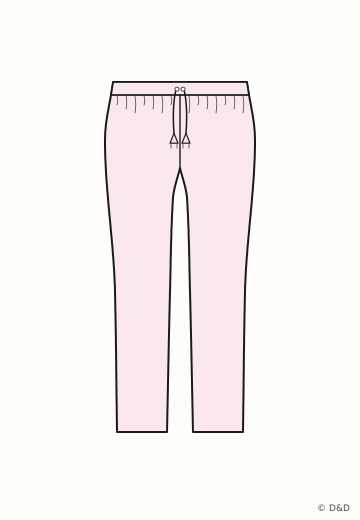
Nada-waist pants – simple straight or tapered pants on a drawstring
Other names
Drawstring pants, nada pants, naada pants; नाड़ा (nada) is the drawstring in Hindi; ನಾಡಾ is used by Kannada tailors.
Where it comes from
The nada is the traditional fastening of South Asian trousers. Nada-waist pants are a modern everyday style, sold with kurtas and kurtis, that keep the nada on a trouser-shaped leg.
The cut
Mid to high rise with a nada casing and a front opening for the cord, lightly gathered, with a straight or slightly tapered leg and an ankle hem. Often latkans (tassels) on the cord ends.
Fabric
Best: cotton, cambric, linen blends and rayon. Worst: very bulky cloth, which gathers badly on a cord.
From the block
The women’s block with the darts released into gathers, and a casing instead of a waistband: Module 6, Waistbands: elastic, half-elastic, nada and adjustable.
Wear it
Women: with straight kurtas and kurtis; home, daily wear and travel. Men: lounge and yoga wear. Children: use elastic, not a long cord (see Children’s trousers: safety).
Fit notes and a tip
The waist should sit level when tied. Tip: stitch the nada to the casing at the centre back so it cannot be pulled out in the wash.
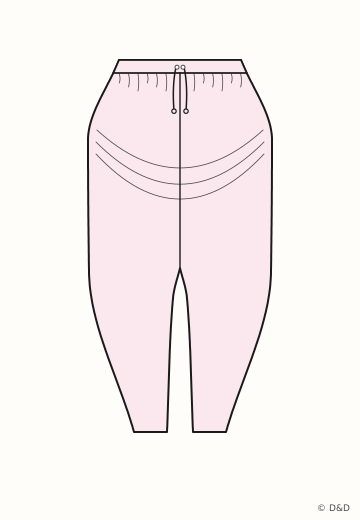
Suruwal (Nepal) – loose at the seat, close on the lower leg, the trouser of Nepal’s national dress
Other names
Suruwal, surwal; सुरुवाल in Nepali. With the tie-front daura tunic, it is the daura suruwal (labeda suruwal is a related name).
Where it comes from
The daura suruwal is the traditional men’s dress of the hill communities of Nepal and has been treated as national dress, worn with the topi cap and often a waistcoat or coat. Its exact origins are not recorded; links with north Indian and Mughal court dress are often suggested. Women in Nepal wear the kurta suruwal, close to the salwar suit.
The cut
High rise on a drawstring, a very roomy seat and thigh, then narrowing from the knee to a close ankle, a little like a churidar without the rings.
Fabric
Best: cotton and cotton blends, often white, cream or light grey for men’s formal wear. Worst: stiff cloth that will not gather at the waist.
From the block
Close to the churidar-pyjama in Module 4, Indian drafts: churidar on the bias and kurta pyjama: a deep asan and full top, tapered from knee to ankle, without the extra length.
Wear it
Men: with the daura, a waistcoat or coat and the Dhaka topi, for weddings, Dashain, Tihar, official events and national days. Boys: small daura suruwal sets. Women: the kurta suruwal for daily and festive wear.
Fit notes and a tip
The lower leg should be close but pass easily over the heel. Tip: ask the wearer whether the ankle is worn plain or with a small slit; customs vary.
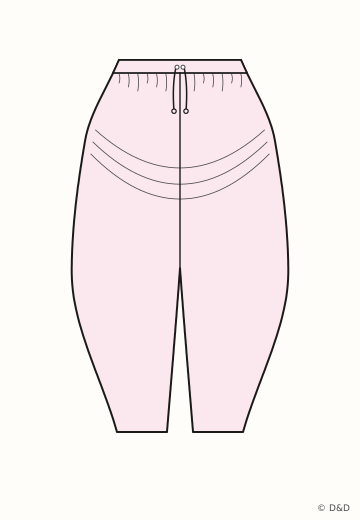
Shalwar (Pakistan, Bangladesh) – wide drawstring trousers of the shalwar kameez, in many regional cuts
Other names
Shalwar, salwar; شلوار in Urdu; সালোয়ার in Bengali. With the tunic: shalwar kameez, salwar kameez.
Where it comes from
The shalwar kameez is the national dress of Pakistan for women and men. Regional cuts differ: very wide shalwars in Balochistan and Khyber Pakhtunkhwa, the men’s Pathani suit, and finely pleated or gathered Sindhi forms; sources differ on the details. In Bangladesh the salwar kameez is daily wear for many women, beside the saree, while men wear the pyjama with the panjabi for festivals and the lungi at home.
The cut
High rise on a nada, very wide panels with a deep asan, gathered at the waist and narrowed to the ankle. Men’s shalwars are often wider than women’s, with wide mohris.
Fabric
Best: cotton, lawn, khaddar, wash-and-wear blends for men, and silk or chiffon for festive wear. Worst: stiff cloth that will not gather.
From the block
The salwar draft in Module 4, Indian drafts: salwar, kali and Patiala, with wider panels for the fuller regional cuts.
Wear it
Women: with kameez and dupatta, for every occasion from daily wear to weddings. Men: with a long kameez, sometimes a waistcoat, for daily, office, Friday prayer and Eid. Children: smaller sets for Eid and family events. Shoes: khussa, peshawari chappals, sandals.
Fit notes and a tip
The shalwar should allow kneeling and sitting on the floor without pulling. Tip: ask where the customer’s family comes from; the regional width and ankle matter to them.
Sources and uncertain points
- Sharara and gharara: names used loosely and sometimes reversed; histories differ in detail.
- Gharara and farshi pyjama: the link is traditionally said; sources differ.
- Jodhpurs and Sir Pratap Singh’s 1897 visit: traditionally said; the details vary.
- Pre-stitched dhoti and ready-to-wear mundu: first appearance not recorded; temple and ritual customs vary.
- Pant-style lehenga, cigarette pants, straight pants and nada-waist pants: shop names; dates are approximate.
- Daura suruwal origins: links to Indian court dress often suggested, not proven.
- Regional shalwar forms in Pakistan: broadly described; sources differ.
- Main source: D&D ebook Encyclopedia of Trousers for Women, ch. 4, widened with general dress history.