The wide drawstring trouser of Central and West Asia is the parent of India’s salwar, the source of the word itself, and the shape behind Europe’s “Turkish trousers” of 1851. This lesson follows that family from Afghanistan and Central Asia through Turkey, Iran, the Kurdish regions and Arabia to North Africa, and then to the embroidered trousers of West Africa and the jodhpur-cut trousers of Ethiopia.
What you’ll learn
- Eleven trousers, each with its region, community and own name.
- How the şalvar, shalvar, sirwal and sarouel are related, and how they differ.
- The trousers of Yoruba, Hausa and Ethiopian men’s dress.
- How each one is cut, and which Module 4 draft is the nearest start.
What links these styles
Most of these trousers are wide at the seat, held with a drawstring or sash, and worn under a long shirt, robe or dress. They give modesty through looseness and room for sitting, kneeling, riding and heat. The words are related too: Persian shalvar sits behind Turkish şalvar, Arabic sirwal, North African sarouel and South Asian salwar, although each garment has its own cut.
To tell them apart, look at three things:
- The crotch: very low in the şalvar and sarouel, deep but closer in the tunban and sirwal.
- The ankle: gathered in the şalvar, wide and open in the tunban, banded or embroidered in Central Asian, Omani and Hausa trousers, and close in the Ethiopian suri.
- The garment over it: perahan, chapan, thobe, djellaba, buba, babban riga or the Ethiopian long shirt.
These styles reach Indian fashion through the salwar itself, through drop-crotch and Afghani pants and through fusion wear. The background is in Trousers across Asia and Trousers across Africa, Europe, the Americas and Oceania. Many of these garments are worn for prayer, Eid, Newroz, weddings and national days; describe them as their wearers do.
Tap any style to open its entry.
Tunban (Afghanistan) – very wide drawstring trousers worn with the long perahan shirt

Other names
Tunban (Dari), partoog (Pashto); with the shirt, perahan tunban (or perahan wa tunban). Spellings vary.
Where it comes from
The perahan tunban is the traditional men’s dress of Afghanistan, worn by Pashtun, Tajik, Hazara, Uzbek and other communities, with regional differences in width and embroidery. Afghan women wear wide trousers under long dresses. The Pathani salwar of South Asia is a close relative (see Every trouser: India and South Asia (salwars, churidar and pyjamas)).
The cut
A very wide body of cloth gathered onto a drawstring in a deep casing, a very low, roomy crotch, and wide legs to the ankle, often with no taper. Very little fitting.
Fabric
Best: cotton, cotton blends and, for winter, wool blends. Worst: stiff cloth, which will not gather.
From the block
Close to the salwar draft in Module 4, Indian drafts: salwar, kali and Patiala, with wider panels and a wider mohri.
Wear it
Men: with a long perahan shirt, a waistcoat and a turban or cap, for daily wear, Friday prayer and Eid. Boys: smaller sets for Eid. Shoes: sandals, chappals.
Fit notes and a tip
Allow plenty of room for kneeling and sitting on the floor. Tip: use a soft, wide drawstring; the weight of the cloth pulls on it.
Ishton (Central Asia) – trousers worn under robes and dresses, narrow ankles for women

Other names
Ishton (Uzbek), lozim (women’s trousers in Uzbek and Tajik usage), and other names by language and region; spellings vary.
Where it comes from
Across Uzbekistan, Tajikistan, Kyrgyzstan, Kazakhstan and Turkmenistan, women and men have long worn trousers under robes and dresses. Women’s trousers are often cut narrow at the ankle and finished with a decorated band, sometimes a woven braid, that shows below the dress hem. Men wear wider trousers under the quilted chapan coat, with boots for riding.
The cut
A drawstring waist, a roomy seat with a low crotch, and legs narrowing to the ankle. On women’s trousers the visible lower leg can be in a finer fabric than the upper part, with an embroidered or braided band at the hem.
Fabric
Best: cotton, silk, and ikat silk or adras (silk-cotton ikat) for festive wear. Worst: heavy fabric under a long dress.
From the block
Close to the churidar-pyjama shape in Module 4, Indian drafts: churidar on the bias and kurta pyjama, without the extra length, plus a decorated band at the ankle.
Wear it
Women: under a long dress for weddings, Navruz and family events. Men: under the chapan with boots. Girls: festive sets. In Indian fusion wear, ikat trousers echo this style.
Fit notes and a tip
The ankle band should show neatly below the dress. Tip: cut the visible lower leg on the same grain as the upper leg so the ikat pattern lines up.
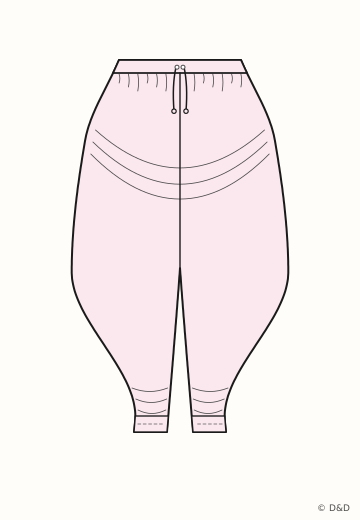
Şalvar (Turkey) – very full trousers with a very low crotch, gathered at waist and ankle
Other names
Şalvar (pronounced shal-var); in English sometimes “Turkish trousers” or “Ottoman trousers”.
Where it comes from
The şalvar was worn across the Ottoman world by women and men, at court under the entari robe and in villages for daily work. It is still worn in rural Anatolia, often in printed cotton, especially by women for farm work, and appears in folk-dance dress. This family is what nineteenth-century Western dress reformers drew on for the “Turkish trousers” of 1851 (see Every trouser: history’s trousers, Bloomers / Turkish trousers).
The cut
Often cut from large rectangles with a very low crotch, sometimes close to the knee, gathered onto a drawstring at the waist and gathered or banded at the ankle.
Fabric
Best: printed cotton, cotton-viscose, silk for festive wear. Worst: stiff cloth, which balloons out.
From the block
From rectangles, or from the harem shape in Module 4, From the block: palazzo, harem, culotte and jogger, with the crotch lowered further.
Wear it
Women and men: with a tunic or shirt for home, farm and folk dance. Elsewhere: casual and yoga wear. Shoes: flats, sandals.
Fit notes and a tip
Lower the crotch only as far as the wearer’s stride allows. Tip: call it by its own name, şalvar, not “harem pants”.
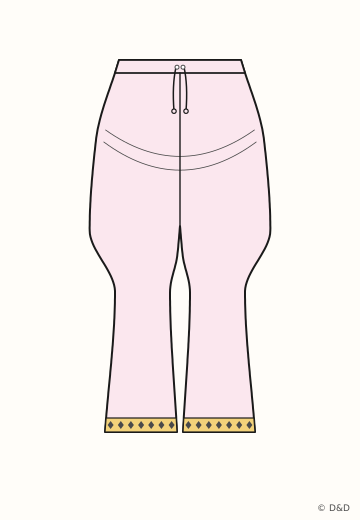
Sirwal (Arabia) – loose drawstring trousers worn under the thobe or long dress
Other names
Sirwal, serwal (سروال in Arabic); plural sarawil.
Where it comes from
Across the Arabian Peninsula and the Levant, men wear a white cotton sirwal under the thobe or dishdasha, mainly as an under-garment. Women traditionally wear sirwal under long dresses; in Oman and parts of the Gulf, women’s sirwal have richly embroidered ankle cuffs that show below the dress. The word is related to Persian shalvar.
The cut
Drawstring waist, roomy seat and legs that are loose at the thigh and straight or slightly narrow to the ankle. Women’s cuffs may be fitted and embroidered.
Fabric
Best: white cotton for men’s sirwal; cotton or silk, with embroidered cuffs, for women. Worst: heavy or hot fabric.
From the block
The straight pyjama in Module 4, Indian drafts: churidar on the bias and kurta pyjama, or a narrower salwar.
Wear it
Men: under the thobe, with ghutra or kuma cap, daily and for prayer. Women: under dresses and abayas. Children: smaller sets for Eid. Shoes: sandals.
Fit notes and a tip
Under a thin thobe, the sirwal should be white and opaque enough. Tip: embroider ankle cuffs before attaching them to the leg.
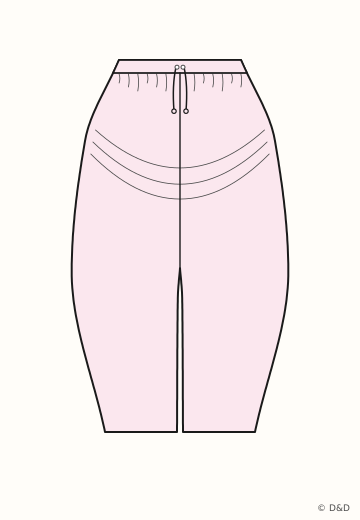
Shalvar of Iran – the Persian wide trouser, in many regional and tribal forms
Other names
Shalvar (شلوار in Persian), the general Persian word for trousers.
Where it comes from
Persia is one of the oldest homes of the trouser: Persian riders wore trousers in antiquity (see Every trouser: history’s trousers, Scythian and Persian trousers). Today’s word for trousers in Persian is still shalvar. In regional and tribal dress, such as that of Bakhtiari and Lur men, very wide dark trousers are reported; women’s regional dress often combines trousers with layered skirts and tunics. Styles differ widely by region and community.
The cut
A drawstring waist, a low roomy crotch and very wide legs, either straight and open (many men’s styles) or gathered at the ankle.
Fabric
Best: wool and cotton, black or dark for many men’s regional styles. Worst: clingy fabric.
From the block
The salwar draft in Module 4, Indian drafts: salwar, kali and Patiala, with wide panels and a wide or gathered mohri.
Wear it
Men: with a long coat, sash and felt cap in regional dress for weddings, Nowruz and festivals. Women: under tunics and skirts in regional dress. Children: smaller festival sets. Shoes: giveh (woven cotton shoes) or boots.
Fit notes and a tip
Ask the customer which region the outfit belongs to; widths and colours differ. Tip: use pictures from the family, not general “Persian” images.
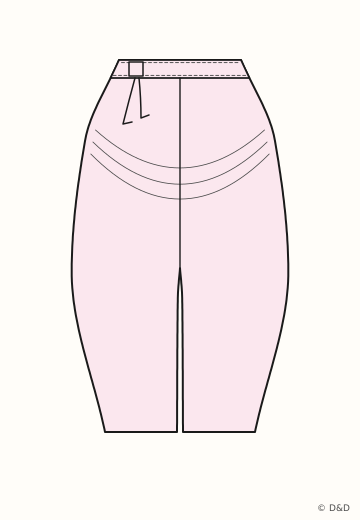
Kurdish shalvar – very wide trousers with a broad sash, for men; full trousers under dresses for women
Other names
Shalvar, sharwal, şelwar (spellings vary between Kurdish dialects). A men’s suit of handwoven jacket and trousers is known as şal û şapik.
Where it comes from
Kurdish men across the Kurdish regions of Iraq, Iran, Turkey and Syria wear very wide trousers with a long shirt, a waistcoat or jacket and a broad sash wound round the waist. Women wear full trousers under long, layered dresses. Kurdish dress is worn with pride at Newroz (the new year, 21 March), weddings and national days. Styles differ by region.
The cut
Very wide legs from a drawstring waist, a very low crotch, and the ankle gathered or narrowed. The sash, many metres long, is wrapped over the waist.
Fabric
Best: wool, mohair and cotton for men’s suits, often grey, brown or khaki; silk and bright colours for women’s festive dress. Worst: stiff synthetics.
From the block
From rectangles, or a very full salwar draft in Module 4, Indian drafts: salwar, kali and Patiala.
Wear it
Men: with a shirt, waistcoat or jacket, sash and headwrap, for Newroz, weddings and community events. Women: under a long dress and coat. Children: Newroz sets. Shoes: klash (handmade cotton shoes) or leather shoes.
Fit notes and a tip
Fit the waist after the sash is wrapped: the sash adds bulk. Tip: make the drawstring long enough to tie under the sash comfortably.
Moroccan sarouel – loose trousers with a low crotch, worn under the djellaba

Other names
Sarouel, seroual, serwal (spellings vary); in French fashion, “sarouel” has come to mean any drop-crotch trouser.
Where it comes from
Loose trousers of this family are worn in Morocco, Algeria and Tunisia by women and men, under the djellaba, gandoura or kaftan. The word shares its root with sirwal. Regional forms are many; in Algeria, for example, women’s festive outfits include very full trousers worn with embroidered jackets.
The cut
A drawstring waist, a very low crotch, roomy thighs and a leg narrowing from the knee to the ankle or mid-calf.
Fabric
Best: cotton, linen and wool for men; silk and brocade for women’s festive versions. Worst: very stiff fabric.
From the block
The harem shape in Module 4, From the block: palazzo, harem, culotte and jogger, tapered below the knee.
Wear it
Men: under the djellaba for daily wear, Friday prayer and Eid. Women: under kaftans and takchitas, and festive sets. Elsewhere: drop-crotch casual wear. Shoes: babouches (leather slippers), sandals.
Fit notes and a tip
The low crotch must still allow a full stride. Tip: label it with its own name and region, not as a generic “harem” trouser.
Kaftan pants (North Africa) – flowing wide trousers in kaftan fabrics, a modern name

Other names
Kaftan trousers, caftan pants.
Where it comes from
“Kaftan pants” is a modern retail name, not a traditional garment name. It describes loose, wide trousers in the light, often embroidered or trimmed fabrics associated with the North African kaftan, sold as a set with a kaftan top or tunic. The traditional trousers under kaftans are the sarouel and its relatives.
The cut
An elastic or drawstring waist, a slightly dropped crotch and very wide straight legs to the ankle or floor. Trim (such as sfifa braid in Moroccan style) may run down the outer leg or round the hem.
Fabric
Best: crepe, georgette, silk, satin, cotton voile. Worst: stiff fabric, which loses the flow.
From the block
The palazzo in Module 4, From the block: palazzo, harem, culotte and jogger.
Wear it
Women: with a kaftan or long tunic for resort, Eid and evening wear. Men: loose versions for lounge and resort. Shoes: flat sandals.
Fit notes and a tip
Line sheer fabrics to the knee. Tip: sew braid trim before closing the side seam, so it runs cleanly.
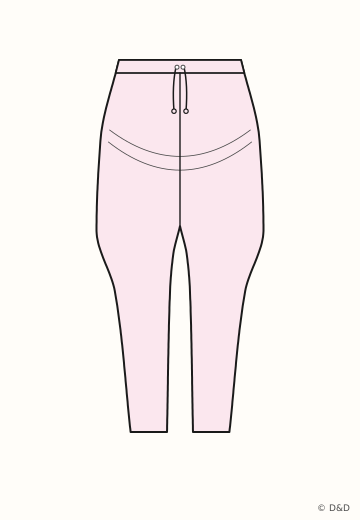
Yoruba sokoto – drawstring trousers of Yoruba men’s dress, worn with the buba and agbada
Other names
Sokoto. Named styles are reported, such as sooro (slim, tapered) and kembe (wide, often shorter); usage varies.
Where it comes from
The sokoto is part of Yoruba men’s dress in south-west Nigeria, Benin and neighbouring regions, worn with the buba (a loose top), a fila cap, and for grand occasions the flowing agbada robe over the whole outfit. Matching sets in the same cloth are worn at weddings, naming ceremonies and festivals, often as aso ebi (coordinated family or guest cloth).
The cut
A drawstring waist (no fly), a roomy seat and legs either tapered to a close ankle or wide and full. Length to the ankle or, for some styles, the calf.
Fabric
Best: aso oke (handwoven Yoruba cloth), adire (indigo resist-dyed cloth), cotton, damask and lace. Worst: very thin fabric, which does not hold the line under the agbada.
From the block
Release the darts of the men’s block (Module 4, The men’s block) into a drawstring, deepen the seat and taper or widen the leg as the style needs.
Wear it
Men and boys: with buba, fila and agbada for weddings, naming ceremonies, Eid, Christmas and festivals; buba and sokoto alone for everyday wear. Women: Yoruba women’s dress is mainly wrapper and blouse; trousers are a modern addition. Shoes: leather slippers or loafers.
Fit notes and a tip
The sokoto should show neatly below the buba and agbada. Tip: cut the whole set from one length of cloth so colours match.
Hausa wando – trousers wide at the seat and close at the ankle, worn under the babban riga

Other names
Wando (Hausa for trousers); embroidered forms are made by Hausa embroiderers.
Where it comes from
Hausa men of northern Nigeria and Niger wear wando with a long shirt (jalabiya or kaftan) and, for grand occasions, the babban riga, a very wide embroidered robe. Hausa trousers are traditionally very wide at the seat and narrow at the ankle, and some are richly embroidered on the lower legs; museum collections hold historical examples. Details vary by town and period.
The cut
A drawstring waist, a very wide seat and very low crotch, narrowing sharply below the knee to a close ankle that shows embroidery below the robe.
Fabric
Best: cotton, handwoven cotton and damask (shadda), with silk or cotton embroidery. Worst: stiff synthetics in heat.
From the block
Close to the suruwal and Pathani forms: the salwar draft in Module 4, Indian drafts: salwar, kali and Patiala, with a very deep asan and a narrow ankle.
Wear it
Men and boys: with babban riga and a cap for Eid, weddings, Durbar festivals and Friday prayer. Shoes: leather slippers.
Fit notes and a tip
The ankle must pass over the heel; add a short opening if the embroidery makes it rigid. Tip: embroider the lower leg flat, before sewing the inseam.
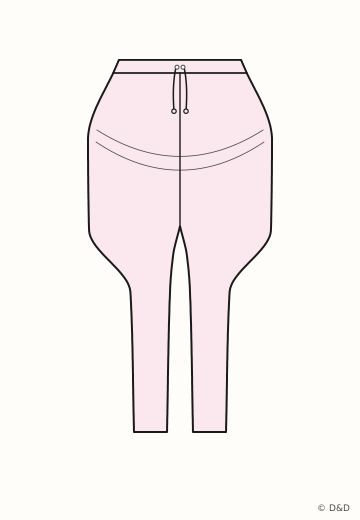
Ethiopian suri (jodhpur-cut) – white trousers loose at the hip and close from the knee
Other names
Suri (Amharic for trousers); spellings and local names vary.
Where it comes from
In the highlands of Ethiopia, men’s traditional dress includes close-fitting white trousers under a long white shirt and a shawl (netela or gabi). The cut, loose at the hip and close from the knee, is often compared with jodhpurs; how the style developed is not clearly recorded. The dress is worn for religious festivals such as Timket (Epiphany) and Meskel, for weddings and for national days.
The cut
A drawstring or elastic waist, generous hip and thigh, then a close lower leg to the ankle.
Fabric
Best: white handwoven cotton (shemma cloth) and fine cotton, sometimes with a coloured woven border (tibeb). Worst: thick or stiff fabric.
From the block
Like the Jodhpuri breeches (Every trouser: India and South Asia (sharara to shalwar)): add width at the thigh and take the leg in from the knee down, with a drawstring waist instead of a fly.
Wear it
Men and boys: with the long shirt and shawl for church festivals, weddings and holidays. Women’s traditional dress is the long white habesha kemis; trousers are modern everyday wear. Shoes: leather sandals or shoes.
Fit notes and a tip
The knee must bend fully; check sitting. Tip: keep white cotton bright by washing it separately and drying it in shade.
Sources and uncertain points
- Tunban, partoog, ishton, lozim, sirwal, shalvar, sarouel: names and spellings vary by language and region.
- The shared root of shalvar, şalvar, sirwal, sarouel and salwar: widely given; individual paths of borrowing differ.
- Bakhtiari and Lur men’s wide trousers: reported in dress writing; details not checked by D&D.
- Kaftan pants: a modern retail name, not a traditional garment.
- Yoruba sokoto style names (sooro, kembe): reported; usage varies.
- Hausa embroidered wando: documented in museum collections; regional details vary.
- Ethiopian suri: the name and jodhpur-like cut are reported; the history is not clearly recorded.
- Main source: D&D ebook Encyclopedia of Trousers for Women, ch. 4, widened with general dress history.