Jeans are the most worn trousers in the world, and the most argued about. Eighteen styles of denim trouser sit in this family, from skinny to barrel, from raw selvedge to ripped. They share one cloth and one way of making, so once you know the family, you can read any pair of jeans at a glance.
What you’ll learn
- What makes a trouser a pair of jeans, whatever its leg shape.
- How to tell the eighteen denim styles apart, including the ones that look alike (mom and dad, boyfriend and girlfriend, flare and kick).
- Which fabric weight and stretch each style needs, and what changes on the pattern.
- How each style is worn in India today, by women, men and children.
What links the family
Denim is a strong cotton twill, traditionally woven with an indigo-dyed warp and an undyed weft. That is why jeans fade on the high points: the knees, the thighs and the seat. Most denim sold today has a little elastane for stretch; rigid denim has none. Jeans also share a way of making: the five-pocket layout (two scoop pockets, a coin pocket, two back patch pockets), a back yoke instead of darts, a jeans fly, flat-felled seams, heavy topstitching and rivets or bar tacks at the stress points (see Jeans front pockets and back patch pockets and Fly variations: jeans, button and children’s flies, Module 6).
How to tell them apart
- By the leg: skinny, slim, straight, bootcut, flare, wide, barrel and baggy follow the same leg shapes as any trouser (see Every trouser: leg shapes (straight to flare) and Every trouser: leg shapes (kick flare to parachute)).
- By the rise and the seat: mom, dad, boyfriend and girlfriend jeans differ mainly in rise, seat room and taper.
- By a detail: carpenter, ripped, selvedge, jeggings and dungaree jeans are named for a pocket, a finish, a cloth, a stretch or a bib.
Denim in India
Jeans arrived in Indian cities through the 1970s and 1980s and are now everyday wear for every age. India is one of the world’s large denim makers: mills in Gujarat and Maharashtra weave the cloth, and garment units in Bengaluru, Ballari, Delhi NCR and Tiruppur sew it (Ballari is often called a “jeans town”; the scale is reported, not measured here). Women wear jeans with kurtis and tops; men with shirts and kurtas; children with almost anything. Dark, plain jeans are now accepted in many offices and colleges, but rarely at temples, pujas or formal ceremonies.
Tap any style to open its entry.
Skinny jeans – tight from hip to ankle, stretch denim, close as a legging

Other names
Super-slim, spray-on (informal). “Drainpipe” is an older name for a very narrow trouser, not always denim.
Where it comes from
Very narrow jeans were worn by rock musicians and punks from the 1950s to the 1970s. They became the main jean for women, men and teenagers in the mid-2000s, once stretch denim made them comfortable; designers and musicians of that decade are usually credited with the shift (sources differ on who came first). The 2020s moved towards looser legs, but skinny jeans remain widely worn.
The cut
Mid or high rise; standard five-pocket jeans waist; jeans fly. The leg hugs the body from hip to ankle, with a hem of about 10–12 in (25–30 cm) round for an adult. Usually cut to the ankle.
Fabric
Stretch denim with 2–4% elastane and good recovery, about 9–11 oz. Rigid denim does not work at this width. Very low weights with poor recovery bag at the knee by evening.
From the block
Start from the block and taper the whole leg (From the block: taper, flare and wide legs), then remove ease for stretch: the amount depends on the fabric’s stretch, so test a toile (Troubleshooting a first draft: toiles, stretch and asymmetry). Replace darts with a back yoke (Darts, pleats and yokes on paper).
Wear it
Women: with long kurtis, tunics or short tops; ankle boots, flats or heels. Men: usually a slim fit rather than true skinny, with shirts and trainers. Children: soft stretch skinny jeans with an elastic back waist.
Fit notes and a tip
Do ten squats in the fitting room: stretch denim should be judged after it has been worked. Buy stretch skinnies slightly snug; they relax in one wear. Tip: a narrow hem must still pass over the heel, so check the ankle opening before you cut.
Slim – close through hip and thigh, gently narrowing to a neat hem

Other names
Slim fit, slim straight, slim tapered (the last tapers more below the knee).
Where it comes from
A name used by jeans makers from the late twentieth century for a leg between skinny and straight. It became the everyday default for many men in the 2010s.
The cut
Mid rise; jeans waist and fly. Close through seat and thigh, with a little room so the jeans do not show every line of the leg. The leg narrows slightly from knee to hem, about 13–15 in (33–38 cm) round for an adult man.
Fabric
Denim with 1–2% elastane, 10–12 oz, is the easiest. Rigid denim works if the pattern keeps more ease at the thigh and seat.
From the block
Take the block’s side and inside leg in evenly from hip to hem, a little more below the knee (From the block: taper, flare and wide legs). Add the yoke and jeans pockets. For a rigid cloth, keep full block ease at the seat.
Wear it
Men: the easiest jean for office-casual days, with a shirt, polo or short kurta and loafers or trainers. Women: with shirts and blazers. Teens: the usual school-free-day jean.
Fit notes and a tip
Pulling lines from the crotch to the thigh mean the thigh is too tight, not the waist. Tip: a slim jean with a slightly longer leg breaks once on the shoe; one with no break looks cropped on tall wearers.
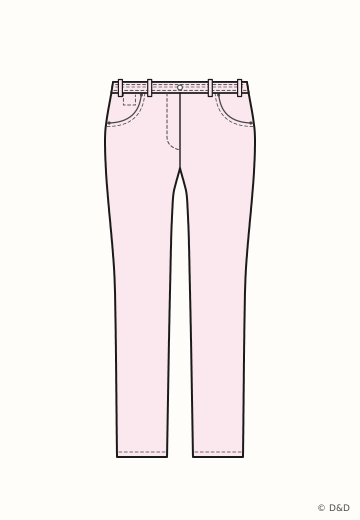
Straight – the same width from knee to hem, the classic jean
Other names
Regular, classic, straight-leg. The original riveted work jean was a straight leg.
Where it comes from
Riveted work trousers in denim were patented in the United States in 1873 by a tailor and a dry-goods merchant in San Francisco. Their straight, roomy work trouser is the ancestor of every jean in this family. The names “denim” and “jean” are traditionally said to come from serge de Nîmes (a French cloth) and Gênes (Genoa, where a sturdy cotton was traded), but sources differ on how the two words came to their modern meaning.
The cut
Mid rise; jeans waist and fly; five pockets. The leg falls straight from the knee to the hem, about 15–17 in (38–43 cm) round for an adult man, a little less for women. Full length, with a plain double-turned hem.
Fabric
Any jeans denim: rigid 12–14 oz for a classic jean that moulds to the body over time, or stretch 10–12 oz for comfort. Too light a weight makes the straight leg cling and twist.
From the block
This is the nearest jean to the block itself. Keep the leg straight from knee to hem (From the block: taper, flare and wide legs), turn the back darts into a yoke (Darts, pleats and yokes on paper), add a jeans fly and pockets. Sew in the jeans order (Order of construction: jeans, salwar and churidar).
Wear it
The most useful jean for everyone. Women: with kurtis, shirts, knitwear; flats, sandals, ankle boots. Men: with shirts, T-shirts, short kurtas and a blazer for smart-casual. Children: with T-shirts and sweatshirts, in stretch denim with an adjustable waist.
Fit notes and a tip
Leg twist (the side seam swinging to the front) usually comes from cutting off grain or from the twill’s own torque; cut each leg on true grain and check after the first wash. Rigid denim may shrink in length; wash it before hemming. Tip: a dark, plain straight jean is the most formal jean you can own.
Bootcut – slim to the knee, opening slightly to sit over a boot

Other names
Boot-leg, boot-cut.
Where it comes from
Cut to fit over riding and cowboy boots in the American West (traditionally said). A main women’s jean of the late 1990s and 2000s, now back as a softer, less extreme style.
The cut
Mid or low rise; jeans waist and fly. Fitted through hip and thigh, narrowest at the knee, then a gentle opening of about 1–2 in (2.5–5 cm) more than the knee. Long enough to cover the top of the shoe or boot.
Fabric
Stretch or rigid denim, 10–13 oz. Very soft, light denim collapses and loses the small flare.
From the block
Narrow the leg to the knee, then add a little width at the hem on both side and inside seams, blending a smooth line (From the block: taper, flare and wide legs). Add length for heels.
Wear it
Women and men: with boots, block heels or chunky shoes; with shirts, short kurtis and fitted tops. It balances a fuller hip or thigh by adding a little width at the hem.
Fit notes and a tip
If the flare starts above the knee, it reads as a flare jean, not bootcut. Tip: hem bootcut jeans wearing the shoes they will be worn with; a flat shoe needs a shorter hem than a boot.
Flare – fitted to the knee, widening clearly to a full hem

Other names
Flared jeans. Bell-bottom is the extreme, older form (see Every trouser: leg shapes (kick flare to parachute)).
Where it comes from
Flared jeans came from navy bell-bottoms through the 1960s counterculture and became a 1970s staple, including in Indian films of that decade. They returned in the late 1990s and again in the 2020s, usually with a high rise.
The cut
High or mid rise; jeans waist and fly. Fitted through seat and thigh, narrowest at or just above the knee, then widening to a hem of about 22–26 in (56–66 cm) round. Long, often touching the floor in heels.
Fabric
Stretch denim, 10–12 oz, for a close top and a smooth flare. Rigid denim gives a stiffer, more 1970s flare.
From the block
Slash from hem to knee and spread, or add equally at side and inside seams below the knee (From the block: taper, flare and wide legs; Adding flare: slash-and-spread, godets and flounces, Module 5). True the hem into a smooth curve.
Wear it
Women: with short or tucked tops, crop kurtis, platforms or heels. Men: a 1970s look, with fitted shirts. The flare balances a fuller seat or thigh.
Fit notes and a tip
A flare that starts too high looks heavy; keep the narrowest point at the knee. Tip: on denim with a strong twill line, both legs must be cut in the same direction, or the flares hang differently.
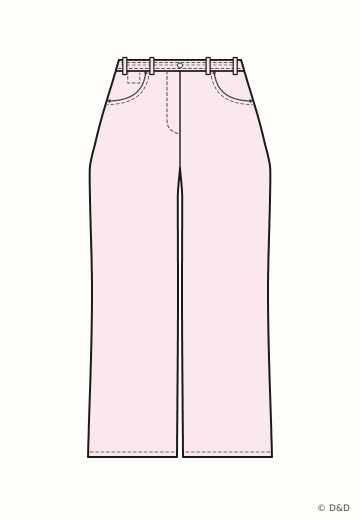
Wide-leg – roomy from hip to hem, straight and full
Other names
Wide jeans, palazzo jeans (when very wide and soft), sailor jeans (with a button front; see Every trouser: leg shapes (kick flare to parachute)).
Where it comes from
Seen in 1930s women’s work and leisure denim and in 1970s fashion, wide-leg jeans came back strongly from the late 2010s as a reaction against skinny jeans.
The cut
High rise; jeans waist and fly. The leg hangs wide and straight from the hip, about 24–28 in (61–71 cm) round at the hem. Full length or ankle.
Fabric
Rigid or low-stretch denim, 11–14 oz, holds the shape. Soft, drapey denim (Tencel blends) gives a fluid look. Heavy stretch denim is not needed: the leg has room.
From the block
Add width at both side and inside seams from the hip down, keeping the leg straight (From the block: taper, flare and wide legs). Raise the rise to the natural waist. The seat can be slightly roomier.
Wear it
Women: with fitted tops, crop tops or tucked shirts; trainers, platforms, block heels. Men: a relaxed skate or workwear look with boxy T-shirts. Good in Bengaluru’s warm months, as air moves round the leg.
Fit notes and a tip
A wide leg in heavy denim pulls the waist down; a firm waistband and good belt loops matter. Tip: balance the width with a fitted top or a tucked kurti.
Mom – high waist, roomy seat, tapering to the ankle

Other names
Mom jeans; mum jeans in Britain.
Where it comes from
The cut was everyday women’s denim in the late 1980s and early 1990s. The name came later, popularised by a 2003 American television comedy sketch (reported). It returned as fashion from the mid-2010s.
The cut
High rise to the natural waist or above; jeans waist and fly. Roomy through seat and hip, then tapering to an ankle-length hem. Usually rigid denim, sometimes with a front pleat.
Fabric
Rigid cotton denim, 11–13 oz, mid or light wash. Stretch denim makes it cling and lose the shape.
From the block
Raise the waistline, lengthen the front and back rise, add a little ease at seat and thigh, then taper below the knee (From the block: taper, flare and wide legs). Check the crotch curve on a toile (The crotch curve: shaping and testing).
Wear it
Women and teens: with tucked shirts, crop tops, short kurtis; trainers, loafers or sandals. Roll the hem once to show the ankle.
Fit notes and a tip
The long rise must suit the torso: a short-torsoed wearer may find the waist reaches the ribs. Tip: if the waist gaps at the back, add a dart into the yoke seam rather than taking in the side.
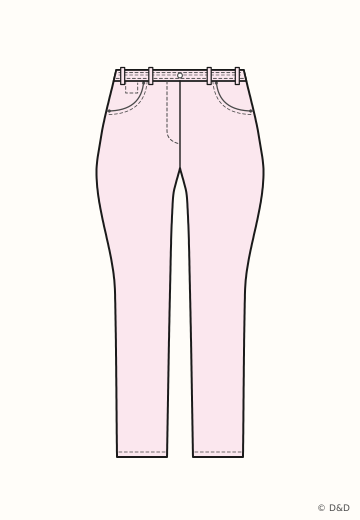
Dad – mid to high rise, relaxed and straight, a little roomy all over
Other names
Relaxed straight, loose straight.
Where it comes from
Named in the 2010s for the plain, comfortable jeans many fathers wore in the 1990s. It shares its moment with “normcore”, the fashion for plain, ordinary clothes.
The cut
Mid to high rise; jeans waist and fly. Straight through seat, thigh and leg, with more ease than a straight jean but less taper than a mom jean. Full length.
Fabric
Rigid or low-stretch denim, 12–14 oz, often a mid or light wash.
From the block
Add ease at the seat and thigh, keep the leg straight from knee to hem, slightly wider than a straight jean (From the block: taper, flare and wide legs).
Wear it
Unisex. With T-shirts, sweatshirts, overshirts and chunky trainers. Easy to wear for long days and travel.
Fit notes and a tip
How it differs from mom jeans: dad jeans are straighter and less tapered, with a lower waist. Tip: a belt helps if the relaxed waist sits loose.
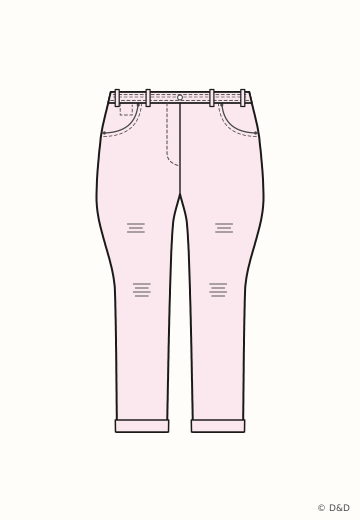
Boyfriend – relaxed, slightly slouchy, low on the hip, often rolled
Other names
Boyfriend fit.
Where it comes from
Women have borrowed men’s jeans since at least the 1950s (some film stars are reported to have done so). The “boyfriend” name and cut became popular in the late 2000s.
The cut
Mid or low rise; sits on the hip. Loose through seat and thigh, a slightly dropped crotch, a straight or gently tapered leg. Usually worn rolled at the ankle.
Fabric
Rigid or low-stretch denim, 11–13 oz, often washed and lightly distressed for a worn-in look.
From the block
Lower the waistline, drop the crotch slightly, add ease at seat and thigh, keep the leg straight (From the block: taper, flare and wide legs). Add length for the roll.
Wear it
Women: with T-shirts, shirts, blazers, loafers or flat sandals for relaxed weekends and travel. Not a men’s style as such: men simply wear relaxed jeans.
Fit notes and a tip
A dropped crotch can look like a sizing mistake if it falls too low; 1 in (2.5 cm) is plenty. Tip: roll the hem in two neat, flat turns, not one thick one.
Girlfriend – a slimmer boyfriend: relaxed seat, tapered leg

Other names
Slim boyfriend, relaxed slim.
Where it comes from
A 2010s retail name for a jean between boyfriend and slim. It is a shop name more than a fixed cut, so it varies by brand.
The cut
Mid to high rise; jeans waist and fly. Relaxed through the seat and hip, then tapering to a neater ankle than a boyfriend jean.
Fabric
Denim with a little stretch, 10–12 oz.
From the block
As for boyfriend jeans, but keep the normal crotch depth and taper the leg from the knee (From the block: taper, flare and wide legs).
Wear it
Women and teens: with short kurtis, shirts, knitwear; trainers or flat sandals.
Fit notes and a tip
How it differs: boyfriend is loose and straight, girlfriend is relaxed above and tapered below, mom is high and tapered with a long rise. Tip: because brands use the name differently, judge by the leg width, not the label.
Barrel – curved out at the knee, narrowing at hip and hem

Other names
Horseshoe jeans, curved-leg jeans, balloon jeans (when softer).
Where it comes from
A trend of the early 2020s, building on 1980s and 1990s fashion shapes. Whether it lasts is not yet known.
The cut
High rise; jeans waist and fly. The leg curves outwards from the hip to its widest at the knee, then curves back in to a narrower ankle hem. Often made with a curved side seam or a seam at the front of the leg to hold the shape.
Fabric
Rigid denim, 12–14 oz. The shape depends on a firm cloth; stretch denim collapses it.
From the block
Slash the leg at the knee and spread it outwards along the side seam, then curve the side seam and inside leg (From the block: taper, flare and wide legs; see also the barrel and horseshoe entries in Every trouser: leg shapes (kick flare to parachute)). Some designs rotate the side seam to the front.
Wear it
Women, men and teens: with short, fitted or tucked tops; chunky trainers, loafers or ballet flats. A fashion statement rather than a basic.
Fit notes and a tip
The curve must start below the hip, not at it, or the seat looks wide. Tip: try a toile in calico first; the curve is hard to judge on paper.
Baggy / 90s – very loose, low or mid rise, pooling at the shoe

Other names
Baggies, skater jeans, loose fit, 90s jeans.
Where it comes from
Very loose jeans spread through hip-hop and skateboarding in the 1990s, partly from wearing larger sizes (reported). They returned with Y2K and 1990s revival fashion in the 2020s. See also Every trouser: street and subculture.
The cut
Low or mid rise; jeans waist and fly. Very loose through seat, thigh and leg; a dropped crotch; extra length pooling over the shoe.
Fabric
Rigid or low-stretch denim, 12–14 oz. Heavier cloth hangs better at this width.
From the block
Add ease all over, drop the crotch 1–2 in (2.5–5 cm), widen the leg evenly and add 2–4 in (5–10 cm) of length (From the block: taper, flare and wide legs).
Wear it
Unisex, mostly teens and young adults: with oversized T-shirts, hoodies and big trainers. A belt is usually needed.
Fit notes and a tip
The extra hem length wears and frays at the back: a heel guard (a strip of tape inside the hem) saves it. Tip: on children’s baggy jeans, keep the length near normal so they cannot trip.
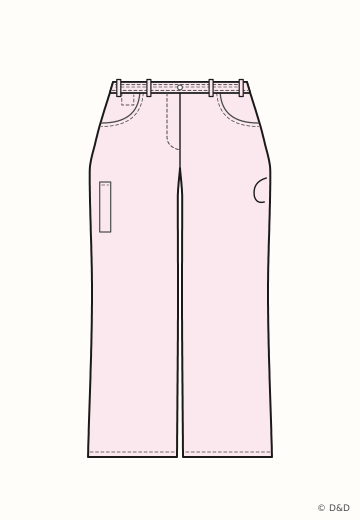
Carpenter jeans – loose straight jeans with a hammer loop and tool pocket
Other names
Painter jeans (when white), work jeans.
Where it comes from
From early twentieth-century American workwear for carpenters and builders. The loose fit and tool loops came into fashion in the 1990s. See also Carpenter and Painter in Every trouser: work and uniform.
The cut
Mid rise; jeans waist and fly. Loose and straight. A cloth loop on the outer left thigh (to hang a hammer) and one or two narrow pockets on the right thigh (for a ruler or pencil).
Fabric
Rigid denim, 12–14 oz; also duck canvas. Not stretch.
From the block
Take a straight, roomy leg (From the block: taper, flare and wide legs), then add the patch pockets and loop (Patch and cargo pockets and Belt loops, tabs and adjusters, Module 6).
Wear it
Unisex. For actual work, or for a workwear look with T-shirts, overshirts and boots. Children love the loops for small tools and toys.
Fit notes and a tip
A loaded tool pocket drags the leg; bar tack its top corners firmly. Tip: place the hammer loop where the hand falls naturally, about level with the fingertips’ reach when standing.
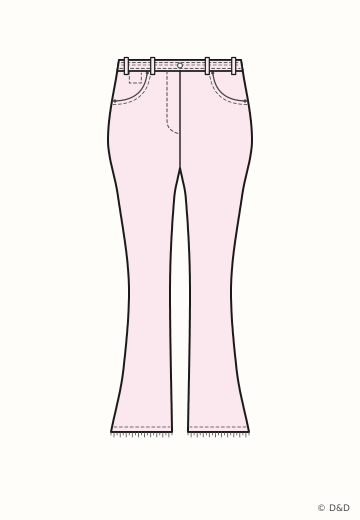
Cropped / kick – ankle-length jeans, straight or with a small flare
Other names
Kick flare, cropped flare, ankle jeans, 7/8 jeans.
Where it comes from
Cropped jeans have come and gone since the 1950s. The “kick flare”, a short jean with a small flare, became popular in the mid-2010s.
The cut
High or mid rise; jeans waist and fly. Fitted to the knee, then straight or a small flare to a hem above the ankle bone. The hem is often left raw or frayed.
Fabric
Stretch or rigid denim, 10–12 oz.
From the block
Shorten the leg to just above the ankle and add a small flare below the knee (From the block: taper, flare and wide legs). For a raw hem, stitch a line of straight stitching above the cut edge to stop fraying going too far (Hems: turn-ups, churidar ankles, raw edges and growth hems).
Wear it
Women: with fitted tops, short kurtis, loafers, mules or block heels that show the ankle. Good with sandals in warm weather.
Fit notes and a tip
Where the hem falls changes how long the leg looks: just above the ankle bone is the most balanced. Tip: wash a raw hem once before wearing to set the fringe.
Ripped / distressed – any jean worn-in on purpose: faded, frayed or torn

Other names
Destroyed, worn-in, faded, acid wash or stone wash (two finishes).
Where it comes from
Torn jeans were worn by punks in the 1970s and grunge musicians in the early 1990s (see Grunge ripped jeans in Every trouser: street and subculture). Factory distressing grew in the 1980s with stone washing and acid washing.
The cut
Any jeans cut. The distressing is the style: whiskers at the hips, honeycombs behind the knee, faded thighs, frayed hems, and rips from small nicks to open knees.
Fabric
Rigid or stretch denim, at least 10 oz; light denim tears too far. Stretch denim rips open wider because the elastane snaps.
From the block
No pattern change. The finish is added after sewing: sanding, grating, cutting the warp threads and leaving the white weft, or laser finishing. Sandblasting has been abandoned by many brands and banned in some countries because it harms workers’ lungs (silicosis); never sandblast at home. See Surface manipulation: bias, folding, bonding and laser-cut work.
Wear it
Casual wear for teens and adults. Not suited to temples, pujas, offices, interviews or family ceremonies in most of India.
Fit notes and a tip
Back rips with a patch of denim or fusible interfacing behind them so they do not spread. Tip: cut only the blue warp threads and leave the white weft as a ladder; it lasts much longer than an open hole.
Jeggings – leggings that look like jeans: pull-on, very stretchy

Other names
Denim leggings. In Indian shops, sometimes simply “denim leggings”.
Where it comes from
Jeans plus leggings. The name was coined around 2008–2010 as very stretchy denim-look knits arrived (reported).
The cut
Pull-on with an elastic or wide knit waistband; often a fake fly and fake front pockets; real back pockets. Skin-close from waist to ankle.
Fabric
Knitted denim-look fabric or very stretchy woven denim with 4% elastane or more and strong recovery. Ordinary jeans denim does not work.
From the block
Draft from a leggings or stretch block with negative ease (smaller than the body), not from the woven block. Remove the fly and side openings; add an elastic waist (Waistbands: elastic, half-elastic, nada and adjustable). See Leggings in Every trouser: active and sport (joggers to cycling shorts).
Wear it
Women and girls: with long kurtis, tunics and longer tops. Comfortable for travel and school days. Toddlers and children: easy to pull on.
Fit notes and a tip
Thin jeggings can turn see-through at the seat when stretched; bend over in front of a mirror. Tip: sew with a stretch stitch and a ballpoint or stretch needle.
Selvedge – jeans from narrow-loom denim, with a clean woven edge on the outseam

Other names
Selvage (American spelling), self-edge, redline (from the coloured thread often woven into the edge).
Where it comes from
Denim was once all woven on narrow shuttle looms, about 30–32 in (76–81 cm) wide, which make a finished, non-fraying edge. Wider, faster projectile looms replaced them from the mid-twentieth century. Japanese mills, especially round Okayama, are widely credited with reviving shuttle-loom denim from the 1980s onwards.
The cut
Usually a classic straight or slim-taper jean, often with a button fly. The outseam is cut along the selvedge, so the clean edge shows when the hem is turned up.
Fabric
Selvedge denim, usually raw (unwashed) and rigid, 12–16 oz. Raw denim may shrink unless it is labelled “sanforised” (pre-shrunk).
From the block
Straighten the outseam of the pattern so it can lie on the selvedge; take all shaping on the inside leg. Fabric is narrow, so plan the lay carefully (Laying out and cutting: grain, nap and fabric layouts).
Wear it
Mostly men and denim lovers of any gender: with plain T-shirts, work shirts and boots, hems turned up to show the edge.
Fit notes and a tip
Raw denim stretches with wear and fades to the wearer’s own creases; buy it close, then wash it rarely and inside out. Tip: buy 10–15% extra length for unsanforised raw denim.
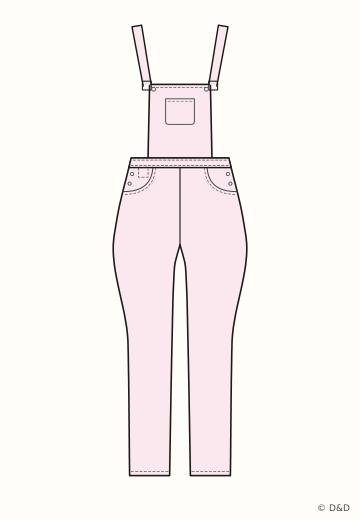
Dungaree jeans – jeans with a bib front and shoulder straps
Other names
Denim dungarees, overalls (American), bib jeans. “Dungaree” is traditionally said to come from dungri, a coarse cotton cloth associated with Dongri in Mumbai.
Where it comes from
Bib overalls were workwear for farmers, railwaymen and factory workers from the late nineteenth century. Fashion took them up in the 1970s and 1990s. See Dungarees / overalls in Every trouser: one-piece.
The cut
A jean leg joined to a bib front and a back panel, with shoulder straps and buckles. Openings with buttons at each side replace the fly.
Fabric
Rigid denim, 10–13 oz; lighter denim for summer and children.
From the block
Extend the front and back above the waist to make the bib and back panel; add straps. Add length to the body rise so the wearer can sit and bend. See Dungarees / overalls for the steps.
Wear it
Women, men and especially children: over T-shirts, with trainers. Easy on and off for toddlers with poppers at the inside leg.
Fit notes and a tip
Sit, bend and reach: the bib must not pull the crotch up. Tip: put the straps on adjustable buckles so the fit grows with a child.