From the pleated hakama of Japan to the silk trousers under Vietnam’s áo dài and the draped sampot of Cambodia, East and Southeast Asia hold some of the oldest and most refined trousers in the world. Several are still worn for ceremony, religion and national dress, and some have become travel and yoga wear far from home. This lesson gives each of the thirteen its own entry.
What you’ll learn
- The traditional trousers of Japan, China, Korea, Vietnam, Thailand, Cambodia, Myanmar, Mongolia and Tibet.
- How to tell them apart by the waist, the width and the ankle.
- Which are ceremonial or religious, and how to treat them with care.
- How each one is made from the Module 4 blocks, or draped.
What links these styles
Most are wide or roomy, held with ties, a fold-over waist or a drawstring rather than a fly, and many are worn under a robe, coat or tunic. You can read the family from the waist:
- Pleated front with long ties: the hakama.
- Ties at waist and ankle: the Korean baji, monpe and momohiki.
- A wide waist folded or wrapped over: Thai fisherman pants and Shan trousers.
- Elastic or drawstring: kung fu pants, elephant pants and modern Chinese ku.
- Draped, not stitched: the Khmer sampot chong kben.
- Riding and cold: Mongolian and Tibetan trousers, tucked into boots.
In Indian fashion these shapes appear as fusion and comfort wear: wrap trousers, culottes, kung fu and fisherman pants for yoga, and the hakama line in designer wide trousers. The background is in Trousers across Asia; the draped sampot is drafted in Module 5, Draped styles: sampot-style trousers and the draped sharara. Use each garment’s own name, and remember that several are worn for prayer, ceremony or national days.
Tap any style to open its entry.
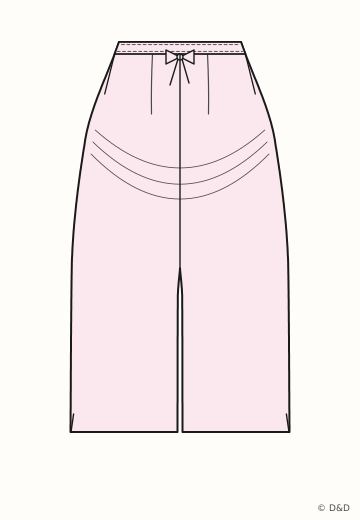
Hakama – wide pleated trousers or divided skirt with long ties, worn over a kimono
Other names
Hakama (袴). The divided form is umanori (“horse-riding”) hakama; the undivided, skirt-like form is andon hakama. The stiff back board is the koshi-ita.
Where it comes from
Hakama have been worn in Japan for well over a thousand years, by court nobles of both sexes in the Heian period and later by samurai. In the late nineteenth and early twentieth centuries they became the uniform of women students, and many women still wear hakama over a furisode kimono at university graduation. Shinto priests and shrine attendants (miko, in red hakama) wear them in religious service, and practitioners wear them in kendo, aikido, kyudo and iaido. In some martial arts the seven pleats are traditionally said to stand for seven virtues; this explanation is not universal.
The cut
Very high on the body, tied above the waist with long ties that wrap round and knot at the front. Deep knife pleats at the front (usually five) and fewer at the back, with open side slits at the hip. Legs very wide and straight to the ankle, divided or not.
Fabric
Best: cotton and polyester-cotton for practice, silk (sendaihira and other striped silks for formal men’s hakama) for ceremony, tightly woven cloth that holds pleats. Worst: soft knits and limp rayon, which lose the pleats.
From the block
Not from the trouser block: hakama are cut from rectangles and trapezoids, with the pleats folded and the ties attached. Plan the pleats as in Module 5, Pleats: knife, box and inverted; the side slits are faced.
Wear it
Women: over kimono for graduation and tea ceremony; designer wide trousers borrow the line for daily wear. Men: with kimono and haori jacket for weddings and formal events. Children: boys at Shichi-Go-San at age five (and three in some families); children’s martial-arts hakama. Shoes: zori or geta with tabi socks; barefoot in the dojo.
Fit notes and a tip
The hem should end at the ankle when tied in place. For religious and ceremonial wear, follow the shrine’s, school’s or dojo’s own rules. Tip: fold hakama along the pleats after wearing, as practitioners do, so the pleats stay sharp.
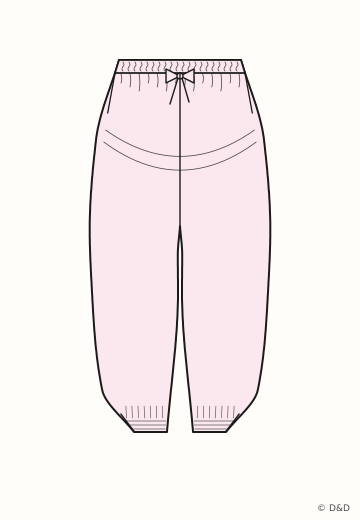
Monpe – loose cotton work trousers gathered at the ankle
Other names
Monpe (もんぺ), mompe.
Where it comes from
Monpe were farm and work trousers in rural northern Japan. During the Second World War the Japanese government promoted them as everyday wear for women, and they spread across the country. Today they are revived as comfortable cotton trousers, often in kasuri (ikat) or indigo-dyed cloth from regions such as Kurume.
The cut
Elastic or drawstring waist, roomy seat (traditionally with a gusset), wide legs gathered or tapered into a narrow ankle. Simple to make from rectangles.
Fabric
Best: cotton, kasuri (ikat) cotton, indigo cotton and linen. Worst: slippery synthetics, which lose the soft shape.
From the block
The jogger or harem shape in Module 4, From the block: palazzo, harem, culotte and jogger, with a gusset as in Module 5, Gussets and the crotch gusset.
Wear it
Women and men: gardening, studio, home and travel, with tees and loose shirts. Children: comfortable play trousers. Shoes: sandals, canvas shoes.
Fit notes and a tip
Ankle elastic should be soft enough for long wear. Tip: a crotch gusset makes floor-sitting and squatting easy.
Momohiki – close-fitting tie-waist trousers for work and festivals

Other names
Momohiki (股引); in festival wear sometimes called matsuri momohiki.
Where it comes from
Close trousers worn in Japan from at least the Edo period by labourers, craftsmen, carpenters and runners, often under a happi or hanten coat. They are still worn at matsuri (festivals), especially by people carrying mikoshi (portable shrines), and by some traditional craftspeople. Winter versions are also worn as long underwear.
The cut
Fitted closely down the whole leg, with an overlapping front that wraps and ties with tapes at the waist. Ankle or below-knee length, plain hem.
Fabric
Best: cotton, indigo-dyed cotton and cotton stretch blends. Worst: thick or stiff fabric, which restricts the knee.
From the block
From the women’s or men’s block, take the leg in closely (Module 4, From the block: taper, flare and wide legs), add an overlap to the front waist and replace the waistband with ties.
Wear it
Men and women: with happi coat and tabi shoes for festivals; as base layers in cold weather. Children: festival sets. For a festival, follow the local group’s colours and customs.
Fit notes and a tip
The knee must bend fully; check a deep squat. Tip: cut with a little stretch fabric if the wearer is new to close trousers.
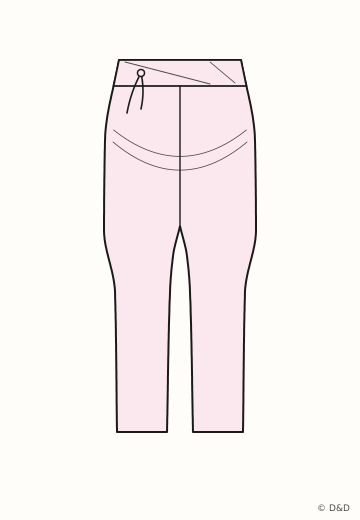
Ku (China) – Chinese trousers: from robe under-wear to everyday straight trousers
Other names
Kù (裤 or 褲), kuzi (裤子). Historically, crotchless leg coverings and crotched trousers had different names (such as kun), and terms changed over time.
Where it comes from
Trousers have been worn in China for more than two thousand years, at first under robes. King Wuling of Zhao is traditionally said to have adopted the trousers of horse-riding neighbours for his soldiers in about 307 BCE. Trousers became more common for women in the Tang and later dynasties, under skirts and jackets, and near-universal in the twentieth century, when practical trousers and tunics became everyday dress for both sexes.
The cut
Traditional ku have a wide waist panel, folded over and held with a cord or sash, a roomy seat and straight legs. Modern everyday ku follow Western trousers. Older forms were sometimes cut with the legs in one width of cloth.
Fabric
Best: cotton, linen, silk and, for winter, padded cotton. Worst: stiff fabric at the folded waist.
From the block
A straight trouser from Module 4, The women’s block: the framework and the front, with the darts released and a deep fold-over waist panel instead of a waistband.
Wear it
Women: with a mandarin-collar jacket (shan or ao) as the samfu set, and for Lunar New Year and cultural events. Men: with a tang-style jacket. Children: festival sets; historical split-crotch toddler trousers are described in Trousers across Asia. Shoes: cloth shoes, flats.
Fit notes and a tip
The folded waist must hold without slipping; a hidden tie inside helps. Tip: match the trouser fabric to the jacket for a classic samfu.
Kung fu / tai chi pants – loose, light trousers with an elastic waist and cuffed or open ankle

Other names
Kung fu pants, wushu pants, tai chi pants, lantern pants (some styles).
Where it comes from
A modern descendant of traditional Chinese loose trousers, worn for martial arts (wushu, kung fu) and tai chi practice, and standardised for training and display in the twentieth century. The general martial-arts trouser is in Every trouser: active and sport (joggers to cycling shorts) and Every trouser: active and sport (golf to dance).
The cut
Elastic or drawstring waist, a deep crotch or gusset for kicks and low stances, wide legs, with an elasticated cuff at the ankle (kung fu) or a straight, open hem (tai chi). Light and loose.
Fabric
Best: cotton, silk and silk blends for display, polyester-cotton and microfibre for training. Worst: stiff fabric, and anything without enough room at the seat.
From the block
The jogger shape in Module 4, From the block: palazzo, harem, culotte and jogger, with a diamond gusset (Module 5, Gussets and the crotch gusset).
Wear it
Women, men and children: for tai chi, kung fu, yoga, meditation and home, with a mandarin-collar jacket or tee. Shoes: cloth kung fu shoes or barefoot.
Fit notes and a tip
Test a deep lunge and a high kick. Tip: a gusset gives more freedom than simply lowering the crotch.
Baji (Korea) – roomy hanbok trousers, tied at the waist and at the ankles

Other names
Baji (바지), the general Korean word for trousers. The ankle ties are daenim; the waist sash is the heoritti. Women’s under-trousers worn beneath the chima skirt include the sokbaji.
Where it comes from
Baji are part of hanbok, Korea’s traditional dress, worn with the jeogori jacket. Trousers appear in Korean tomb paintings of the Three Kingdoms period, worn by women and men; later, women’s trousers moved under the skirt. Men wear hanbok with baji for Seollal (Lunar New Year), Chuseok, weddings and ancestral rites.
The cut
Very roomy, with large crotch panels so the wearer can sit cross-legged on the floor. A wide waistband folded and tied with a sash; the ankles gathered and tied with bands.
Fabric
Best: cotton, ramie, silk and, for winter, padded cotton or silk. Worst: clingy knit fabric, which loses the form.
From the block
Not from the block: cut from rectangles with large crotch pieces, closer to the salwar method in Module 4, Indian drafts: salwar, kali and Patiala, than to a Western trouser.
Wear it
Men: with jeogori and a vest or overcoat for festivals and weddings. Children: hanbok for Seollal and the first birthday (dol). Women: modern hanbok-inspired trousers. Shoes: traditional shoes or plain flats.
Fit notes and a tip
The ankle ties should be firm but not tight. Tip: pre-wash ramie and cotton well; traditional cuts allow for some shrinkage.
Quần with áo dài (Vietnam) – wide, floor-length silk trousers under the long tunic

Other names
Quần (trousers); with the tunic, áo dài. The set is often described as áo dài and quần.
Where it comes from
The áo dài is a long tunic with high side slits, always worn over trousers. Its modern fitted form is usually dated to the 1920s and 1930s, when Hanoi designers (Cát Tường, known as Le Mur, is often named) reshaped earlier Vietnamese tunics; details differ between sources. Women wear it for Tết, weddings, ceremonies and as uniform in some schools and offices; men wear a looser áo dài for weddings and festivals.
The cut
High rise, fitted at the waist, then wide straight legs to the floor, cut so they show between the tunic panels and flow when walking. Usually white or matched to the tunic.
Fabric
Best: silk, satin, crepe and soft polyester satin. Worst: stiff cotton or anything opaque and heavy, which loses the flow.
From the block
The wide-leg pattern in Module 4, From the block: taper, flare and wide legs, lengthened to the floor in the shoes worn.
Wear it
Women and girls: under the áo dài, with heels or flat sandals. Men: under a men’s áo dài. In India, the áo dài line inspires long slit kurtas worn with wide trousers.
Fit notes and a tip
The trousers should just brush the floor in the shoes worn. Tip: cut both legs on the same grain direction in satin, so the shine matches.
Thai fisherman pants – very wide trousers with a wrap-over waist, tied at the front

Other names
Fisherman pants, wrap pants, Thai wrap trousers.
Where it comes from
The style is linked with the loose trousers worn by fishermen and farmers in Thailand and the wider region. Sources describe its origins differently; links to Shan and Burmese trousers are reported. Since the 1990s it has become well known worldwide as travel, beach and yoga wear.
The cut
An oversized waist panel, much wider than the body, wrapped across the front and held with a long tie. Very low crotch and very wide straight legs. One size fits many bodies.
Fabric
Best: cotton, cotton-linen and rayon. Worst: heavy fabric, which makes the wrap bulky.
From the block
Not from the block: cut from rectangles. Draft the waist panel wider than the hip by half again, and see Module 5, Draped styles: cowl-front and wrap trousers.
Wear it
Women, men and teens: yoga, beach, travel and home. Not suited to young children, whose ties can come loose. Shoes: sandals or barefoot.
Fit notes and a tip
The wrap should overlap well past the centre front so it does not open. Tip: teach the customer the fold and tie when they collect it.
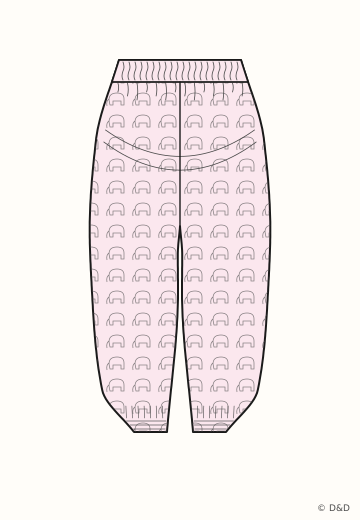
Thai elephant pants – printed rayon trousers with elastic waist and ankles
Other names
Elephant pants, harem pants (in markets).
Where it comes from
A modern style, widely sold in Thai markets from about the 2010s, printed with elephants, one of Thailand’s national symbols. It is a souvenir and travel garment, not traditional Thai dress. Some temples in Thailand ask visitors to cover their legs, and many travellers buy these trousers for that reason.
The cut
Wide shirred or elastic waist, dropped crotch, roomy legs gathered into an elastic ankle.
Fabric
Best: light printed rayon and viscose. Worst: stiff cotton.
From the block
Module 4, From the block: palazzo, harem, culotte and jogger, with a shirred waist as in Module 5, Gathers and elastic shirring.
Wear it
Women, men and children: travel, home, yoga. Visiting a temple: also cover the shoulders, and follow the temple’s own rules. Shoes: sandals.
Fit notes and a tip
Rayon shrinks: pre-wash before cutting. Tip: use several rows of shirring elastic for a soft, wide waist.
Khmer sampot chong kben (draped) – a cloth wrapped, twisted and tucked between the legs

Other names
Sampot chong kben (សំពត់ចងក្បិន); in Thailand and Laos, the similar chong kraben or pha nung.
Where it comes from
A draped garment of Cambodia, worn by women and men, with roots usually traced to the Angkor period; links to the Indian dhoti are often suggested, and sources differ on the details. It is worn for weddings, classical dance, Khmer New Year and ceremonies. A tradition of wearing a colour for each day of the week is reported.
The cut
Not cut: a rectangle of about 3 m wrapped round the waist, the ends twisted together at the front, passed between the legs and tucked in at the back waist. The result looks like full breeches gathered below the knee. Often held with a metal belt.
Fabric
Best: Khmer silk, including the twill-woven silk (sampot phamuong) and ikat (hol). Worst: slippery synthetics, which slide out of the tuck.
From the block
Draped, not drafted. For a stitched version, see Module 5, Draped styles: sampot-style trousers and the draped sharara; the tying is close to the kacche panche in The family: dhoti, mundu, lungi and other wraps.
Wear it
Women: with a fitted blouse and sash for weddings and dance. Men: with a jacket for weddings and ceremonies. Children: for classical dance and festivals. In fusion fashion, sampot-style trousers appear as draped evening wear.
Fit notes and a tip
Tie the waist firmly before twisting, or it loosens. Tip: practise the tie with a cotton cloth before using silk.
Shan trousers (Myanmar) – very wide, deep-crotched trousers with a folded waist

Other names
Shan baungbi (in Burmese, baungbi means trousers); spellings vary.
Where it comes from
Traditional trousers of the Shan (Tai Yai) people of Shan State in Myanmar, worn by men for farming, work and festivals; some neighbouring communities, such as the Intha of Inle Lake, are reported to wear similar trousers. Many writers link them to the Thai fisherman trouser.
The cut
A very wide waist panel, folded over and tucked or tied, a very low crotch and very wide straight legs to the ankle or mid-calf.
Fabric
Best: cotton, often dark blue, black or brown, and handwoven cloth. Worst: stiff synthetics.
From the block
Cut from rectangles, like the Thai fisherman trouser. See Module 5, Draped styles: cowl-front and wrap trousers.
Wear it
Men: with a jacket and a head cloth for work and festivals. Women and men elsewhere: travel and yoga wear. Shoes: sandals.
Fit notes and a tip
The fold must hold through movement; a hidden tie helps beginners. Tip: describe it by its own name on product labels, not as “harem pants”.
Mongolian trousers – riding trousers worn under the deel and tucked into boots
Other names
Ömd (өмд), the Mongolian word for trousers.
Where it comes from
Mongolia’s herding and riding peoples have worn trousers under the deel (a long wrapped robe) for centuries, for women and men. They are shaped for long hours on horseback and for very cold winters.
The cut
A drawstring or tie waist, a roomy seat (sometimes with a gusset), and legs narrowing to tuck into tall gutal boots. Winter trousers are lined with felt, fleece or sheepskin.
Fabric
Best: wool, felt, padded cotton, sheepskin lining for winter; cotton for summer. Worst: thin fabric in cold weather.
From the block
From the men’s or women’s block: release the darts into a drawstring, add a gusset (Module 5, Gussets and the crotch gusset) and taper to fit inside a boot.
Wear it
Women, men and children: under the deel for Tsagaan Sar (Lunar New Year), Naadam and daily herding life. Elsewhere: lined winter trousers for cold travel. Shoes: tall boots.
Fit notes and a tip
Check a riding position: knees up, seat back. Tip: reinforce the inner thigh, which wears fastest in the saddle.
Tibetan trousers – warm, roomy trousers worn under the chuba

Other names
Names vary by region and language; in English they are usually described simply as Tibetan trousers.
Where it comes from
Tibetan women and men wear trousers under the chuba, a long robe tied at the waist, across the Tibetan plateau and in Tibetan communities of Ladakh, Sikkim, Bhutan, Nepal and in exile, including in Karnataka (Bylakuppe and Mundgod). They are made for cold, altitude and riding.
The cut
A drawstring waist, a roomy seat and legs tucked into boots or tied at the ankle. Winter versions are lined or quilted.
Fabric
Best: wool, wool blends, padded cotton and, for summer, cotton. Worst: thin synthetics in cold weather.
From the block
Close to the Mongolian trouser: release the darts into a drawstring and add room at the seat.
Wear it
Women and men: under the chuba for Losar (Tibetan New Year), weddings and religious festivals; married women in central Tibet also wear a striped apron (pangden). Children: small chubas with trousers. For religious occasions, follow the community’s own customs.
Fit notes and a tip
Trousers should be long enough to tuck into boots without pulling at the knee. Tip: ask Tibetan customers in Karnataka about their regional dress before suggesting a cut.
Sources and uncertain points
- Hakama: the meaning of the seven pleats is traditionally said in some martial arts, not all.
- Monpe: wartime promotion in Japan is well recorded; regional origins are described broadly.
- Ku: the date for King Wuling of Zhao is traditional; early Chinese trouser terms changed over time.
- Áo dài: the role of Cát Tường (Le Mur) in its modern form is often stated; sources differ on details.
- Thai fisherman pants and Shan trousers: origins described differently; links reported.
- Sampot chong kben: Angkor-period roots and a link with the dhoti are often suggested; day-colour custom reported.
- Mongolian and Tibetan names and details vary by region and community.
- Main source: D&D ebook Encyclopedia of Trousers for Women, ch. 4, widened with general dress history.